
Location & Continent
Continent: Mostly Europe & Asia (Eurasian Arctic), with related polar desert zones in North America & Greenland
Core Arctic Desert Ecoregion:
Svalbard (Norway), Franz Josef Land, Severny Island (Novaya Zemlya) and Severnaya Zemlya (Russia) – all lying above about 75°N in the Arctic Ocean
Broader Polar Desert Belt:
Includes extremely dry High Arctic areas of northern Greenland and the Canadian Arctic Archipelago (for example Ellesmere and Devon Islands).
Approximate Coordinates:
75–82°N, 20–100°E (Eurasian Arctic desert core) and 70–85°N, 40–90°W (Greenland–Canadian polar deserts)
Arctic Desert – Map & Street View
Photos of the Arctic Desert
Physical Features
Area (core Arctic desert ecoregion): Around 161,400 km² of islands in the Arctic Ocean, mostly ice, snow and bare rock
Wider polar desert belt: Up to several million km² of very dry High Arctic landscapes spread across Eurasia, Greenland and North America
Elevation: Mostly low coastal plains and rolling plateaus; local mountains and ice caps rise above 1,500 m in places
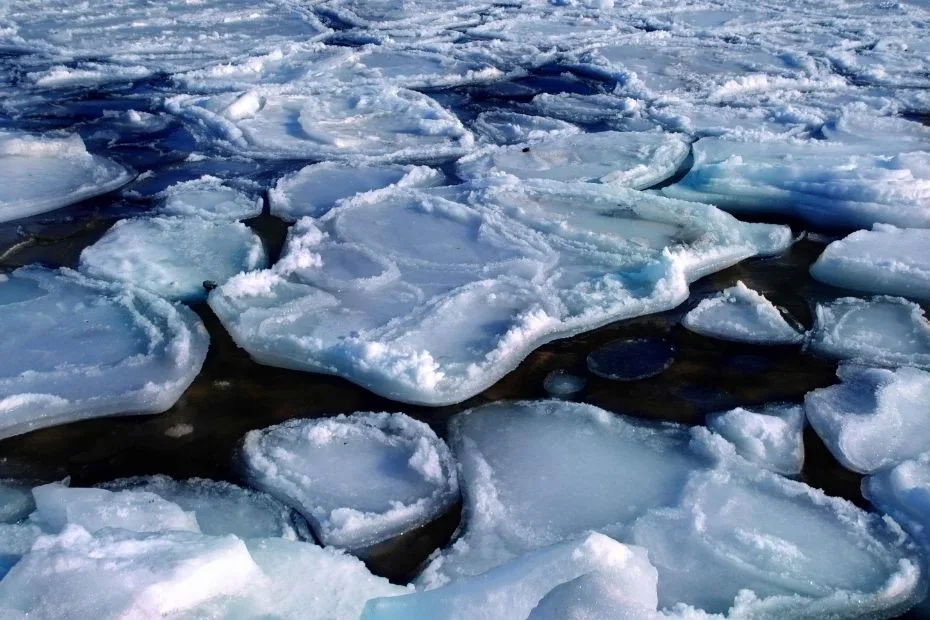
Surface: Glaciers, permanent ice caps, frozen seas, patterned ground, frost-shattered rock fields and thin gravelly soils over permafrost
Water bodies: Sea ice–covered fjords, seasonal meltwater streams, small ponds and coastal polynyas (open-water areas within sea ice)
Climate & Precipitation
Climate type: Polar desert / High Arctic tundra – long, dark winters and very short, cold summers
Mean winter temperatures: Often below -25 °C; at one Arctic desert station in Franz Josef Land, January averages around -25.6 °C
Summer temperatures: Usually just above freezing; warmest month stays under 10 °C, which is a defining temperature limit for tundra climates
Precipitation: Generally less than 250 mm per year, often under 100 mm in the driest Canadian and Greenlandic polar deserts – similar to some hot deserts, but much of the precipitation falls as snow
Wind: Persistent winds, katabatic flows off ice caps and occasional dry föhn winds that can raise temperatures quickly along coasts
Ecological Features
Ecozones & Biomes:
– Palearctic Arctic desert ecoregion (WWF ID: PA1101) – tundra biome in the Eurasian Arctic
– Canadian and Greenland High Arctic tundra – also functioning as polar deserts in their driest sectors
Permafrost: Ground is frozen to great depth year-round; only a thin active layer thaws for a few weeks each summer.
Vegetation cover: From completely bare ice and rock to sparse carpets of mosses and lichens (often just 5–10% cover in the true desert zones)
Flora & Fauna
Typical Flora:
– Crustose and foliose lichens and cold-hardy mosses on exposed rock and soil
– Tiny cushion plants, saxifrages, Arctic poppies and rushes in slightly warmer, sheltered places
– In coastal foothills and lowlands: patchy herbaceous cover of sedges, grasses and dwarf willows where snow melts earlier
Typical Terrestrial Fauna:
– Polar bear – strongly dependent on sea ice for access to seals
– Muskox, caribou/reindeer, Arctic hare and lemmings in somewhat more vegetated High Arctic tundra
– Arctic fox and High Arctic wolves in suitable parts of the wider Arctic region
Marine & Coastal Wildlife:
– Ringed, bearded and harp seals using sea ice for resting or breeding
– Walrus feeding on benthic animals along shallow continental shelves
– Narwhals, beluga whales and bowhead whales in Arctic waters
Birdlife:
Short summers support large nesting colonies of seabirds, including kittiwakes, guillemots, ivory gulls and little auks. Many migrate long distances to use the seasonal productivity of Arctic coastal waters and ice-edge habitats.
Geology & Notable Features
Geological Foundation:
The Arctic desert rests on a mix of ancient crystalline shields, sedimentary basins and younger glacial deposits. Repeated glaciations sculpted fjords, cirques and U-shaped valleys, leaving moraines, glacial sediments and patterned ground.
Typical Polar Desert Landforms:
- Ice caps & outlet glaciers flowing toward the sea
- Raised beaches marking former sea levels as ice sheets retreated
- Polygonal ground created by freeze–thaw processes in permafrost
- Rocky plateaus and nunataks (mountain peaks protruding through ice)
Example Regions:
– Svalbard’s mountains and tidewater glaciers
– Franz Josef Land’s heavily glaciated islands
– High Arctic plateaus of Ellesmere Island and northern Greenland, among the driest and coldest regions in the Northern Hemisphere
What Is the Arctic Desert?
The Arctic desert is not a single sandy basin but a set of polar desert landscapes spread across the High Arctic. These regions qualify as deserts because they receive very little precipitation, while low temperatures keep water frozen for much of the year.
Unlike hot deserts, polar deserts are dominated by rock, snow, ice, permafrost and sparse vegetation. Their dryness comes from low precipitation rather than heat-driven evaporation.
Main Details
| Feature | Arctic Desert Value |
|---|---|
| Climate type | Polar desert / High Arctic tundra (cold and very dry) |
| Annual precipitation | Typically below 250 mm; often below 100 mm in the driest zones |
| Warmest month | Below 10 °C, usually only a few degrees above freezing |
| Core ecoregion area | About 161,400 km² across Svalbard and Russian Arctic islands |
| Main countries and territories | Norway, Russia, Canada and Greenland |
| Typical vegetation | Mosses, lichens and small herbs; many areas have very little plant cover |
| Typical animals | Polar bear, Arctic fox, muskox, walrus, seals and High Arctic seabirds |
Arctic Desert vs. Hot Desert
A landscape covered in snow may seem incompatible with the word desert. Climate classification, however, depends heavily on precipitation and available moisture rather than the presence of sand or high temperatures.
The Arctic desert fits the broader desert concept because:
- Precipitation is usually below 250 mm per year and can fall below 100 mm in the driest High Arctic areas.
- Much of the water remains frozen as snow, ground ice or glaciers and is unavailable to plants for most of the year.
- Cold air contains little water vapour, limiting the amount of precipitation that can fall.
Hot and polar deserts therefore share low moisture availability while differing sharply in temperature, surface conditions, seasonality and ecology.
Countries & Regions Shaped by the Arctic Desert
Norway – Svalbard
The Svalbard archipelago is one of the best-known examples of an Arctic desert landscape. Glaciers cover much of the terrain, while exposed valleys, coastal plains and mountain slopes support sparse tundra vegetation. Longyearbyen is the archipelago’s largest settlement and a centre for research, tourism and local services.
Russia – High Arctic Archipelagos
Franz Josef Land, Severny Island and Severnaya Zemlya contain extensive glaciated and polar desert terrain. Large areas remain sparsely vegetated, with ice caps, exposed rock and frozen coastal landscapes.
Greenland – Kalaallit Nunaat High Arctic
Northern Greenland’s coasts and ice-free plateaus include very dry polar environments with long winters and short growing seasons. Sheltered areas support mosses, lichens, grasses and other tundra vegetation, while muskoxen and other Arctic animals occupy suitable ice-free terrain.
Canada – High Arctic Islands
Islands such as Ellesmere, Devon and Axel Heiberg contain some of the driest cold landscapes in Canada. Parts of the region receive the equivalent of less than 100 mm of water annually, leaving broad areas dominated by bare rock, gravel, permafrost, snow and ice.
Life in a Polar Desert
Organisms in the Arctic desert must function through extreme cold, limited liquid water, strong winds, long winter darkness and a very short growing season.
Plants Stay Low and Grow Quickly
- Low stature: Plants remain close to the ground, where wind exposure is lower and temperatures can be slightly warmer.
- Dark pigments: Darker leaves or flowers can absorb more solar energy during the short summer.
- Fast seasonal growth: Many plants grow, flower and set seed within a few weeks after snowmelt.
- Perennial life cycles: Roots and underground tissues survive successive winters and support growth when summer returns.
Animals Depend on Seasonal Timing and Insulation
- Seasonal movements: Caribou, birds and marine mammals move between feeding, breeding and wintering areas as ice and food conditions change.
- Insulation: Dense fur, feathers and body fat limit heat loss.
- Seasonal coat changes: Arctic foxes and hares can develop white winter coats that provide camouflage in snowy landscapes.
- Flexible activity periods: Animals adjust feeding and movement to temperature, snow, sea ice and seasonal daylight.
Indigenous Peoples & Human Presence
While the core Arctic desert islands are very sparsely inhabited, the wider High Arctic overlaps with the homelands of Indigenous peoples, including Inuit, Inupiat, Yupik, Sámi and other northern communities.
Important aspects of human life across the wider Arctic include:
- Traditional knowledge: Detailed knowledge of sea ice, weather, wildlife and seasonal travel routes supports safe movement and local livelihoods.
- Subsistence activities: Fishing, hunting and reindeer or caribou-related livelihoods remain important in many northern communities.
- Modern settlements: Communities across Svalbard, northern Canada and Greenland combine local services, research, tourism and other economic activities.
Changes in sea ice, snow timing and weather conditions can alter travel routes and seasonal access to coastal and marine environments.
Climate Change & the Arctic Desert
The Arctic is warming faster than the global average. Polar desert environments respond through changes in sea ice, snow cover, glaciers, permafrost, vegetation and coastal conditions.
- Loss of sea ice: Reduced sea ice changes marine habitat and limits access to hunting areas used by polar bears and ice-associated seals.
- Changing snow and rain patterns: Warmer air can alter precipitation type and timing, with more rain occurring in some Arctic settings.
- Vegetation change: Shrubs and other plants are expanding in some Arctic regions as growing conditions shift.
- Permafrost thaw: Thawing frozen ground changes drainage, slopes, soils and infrastructure stability.
- Coastal change: Reduced sea ice can expose Arctic shorelines to stronger wave action for longer periods of the year.
Arctic Sea Ice Maximum in 2026
Arctic sea ice reached its likely annual winter maximum on 15 March 2026 at approximately 14.29 million km² (5.52 million square miles), according to the National Snow and Ice Data Center at the University of Colorado Boulder. The measurement statistically tied 2025 for the lowest Arctic sea ice maximum in the 48-year satellite record.
The 2026 value was about 1.36 million km² below the 1981–2010 average maximum. NSIDC treats annual extent values within 40,000 km² as statistically tied, so the small numerical difference between the 2025 and 2026 measurements does not separate them as distinct record ranks.
This measurement refers to floating sea ice across the Arctic Ocean and surrounding seas, not the area of the Arctic Desert on land. The two are connected ecologically because many High Arctic islands and coastal polar deserts border sea-ice habitat. Polar bears and several seal species depend on that marine ice, while the timing and extent of open water affect coastal conditions and Arctic food webs.
A low winter maximum also means the melt season begins with less ice-covered ocean than the long-term average. A single year does not define the long-term pattern by itself, but the 2026 result sits within the broader decline in Arctic sea ice observed across the satellite era.
Summer 2026 Sea Ice
NSIDC reported that Arctic sea ice extent averaged 5.56 million km² in August 2026 (2.15 million square miles), making it the seventh lowest August average in the satellite record. The monthly average was 840,000 km² above the record-low August value set in 2012.
Sea ice remained well below average around much of the Arctic Ocean. During August, open water expanded rapidly in the Beaufort and Chukchi Seas, and low ice concentrations extended toward the North Pole on the Atlantic side.
The downward linear trend in August sea ice extent through 2026 is 69,100 km² per year, or 9.6% per decade relative to the 1981–2010 average. NSIDC estimates that the Arctic has lost about 3.24 million km² of August sea ice since 1979 based on that trend.
These August figures describe late-summer conditions during the melt season. They should not be treated as the 2026 annual minimum; the seasonal minimum is determined separately after the yearly melt reaches its lowest extent.
Visiting the Arctic Desert Safely
Access to High Arctic polar desert regions varies widely, and many areas are remote even by Arctic standards.
- Access: Visitors commonly reach accessible Arctic areas through organised expeditions, research-linked travel or established destinations such as Svalbard and parts of Greenland.
- Season: Summer, roughly June through August in many locations, brings longer daylight and more accessible coastal conditions.
- Conditions: Cold, rapidly changing weather, sea ice, glaciers, wildlife and remoteness require careful preparation and local guidance.
- Low-impact travel: Visitors should remain on permitted routes, avoid wildlife disturbance and follow local protected-area rules.
Even during summer, Arctic weather and surface conditions can change quickly, especially around glaciers, exposed coasts and sea ice.
Frequently Asked Questions About the Arctic Desert
Is the Arctic Desert the Same as Arctic Tundra?
Not exactly. The Arctic tundra includes broad regions with more continuous vegetation and somewhat greater moisture availability. The Arctic desert refers to the coldest and driest High Arctic areas, where bare ground, ice, rock, lichens and sparse vascular plants dominate.
Does It Snow a Lot in the Arctic Desert?
Not necessarily. Many polar deserts receive very little total precipitation. Strong winds redistribute existing snow, so deep drifts can occur locally even where annual snowfall is low.
What Is the Main Difference Between the Arctic and Antarctic Deserts?
Both contain polar desert environments with extreme cold and low precipitation. Antarctica is a large ice-covered continent. The Arctic is centred on an ocean surrounded by North America, Greenland and Eurasia, with polar desert landscapes occurring mainly on islands and northern continental margins.
How Low Was Arctic Sea Ice in Winter 2026?
NSIDC reported that Arctic sea ice likely reached its 2026 winter maximum on 15 March at about 14.29 million km². The value statistically tied 2025 for the lowest winter maximum in the 48-year satellite record and was about 1.36 million km² below the 1981–2010 average maximum.
Is Arctic Sea Ice Part of the Arctic Desert?
Sea ice and polar desert are different physical environments. Sea ice is frozen ocean water, while the Arctic Desert refers primarily to very dry High Arctic land. They meet along many Arctic coasts and are ecologically connected through wildlife, coastal climate and seasonal food webs.
Why Does Arctic Sea Ice Matter Beyond the Arctic?
Sea ice has a bright surface that reflects a large share of incoming sunlight. When sea ice retreats, darker ocean water is exposed and absorbs more solar energy. Sea-ice change also affects Arctic marine ecosystems and exchanges of heat between the ocean and atmosphere.
Sources
- National Snow and Ice Data Center – Arctic Sea Ice Record Low Maximum Strikes Again (15 March 2026 maximum extent, 14.29 million km² measurement, statistical tie with 2025 and comparison with the 1981–2010 average)
- National Snow and Ice Data Center – Sea Ice Today (Arctic sea ice extent monitoring and satellite-record context)
- National Snow and Ice Data Center – Arctic Zigs; Antarctic Zags (August 2026 average extent of 5.56 million km², seventh-lowest August ranking, regional ice conditions, and 9.6% per-decade August trend)
- World Wildlife Fund – The Arctic (Arctic ecosystems, wildlife and environmental change)
- NASA Earth Observatory – Tundra Biome (Arctic vegetation, climate and tundra conditions)
- National Geographic Education – Arctic (Arctic geography, sea ice and climate processes)
- Encyclopaedia Britannica – Arctic Climate (temperature, precipitation and High Arctic climate)
- European Environment Agency – Polar Desert Habitat (polar desert habitat characteristics and vegetation)