
The best time to visit the Gobi Desert is usually late May to late June or early September to early October. These windows give most travelers the best balance: mild daytime temperatures, cooler nights, better road comfort, and enough daylight for long desert drives. July and August are still popular, but the southern Gobi can feel very hot during the day. Spring can be beautiful, but wind and dust need more planning. Winter is quiet and sharp-edged, yet it is not a simple season for a first Gobi trip.
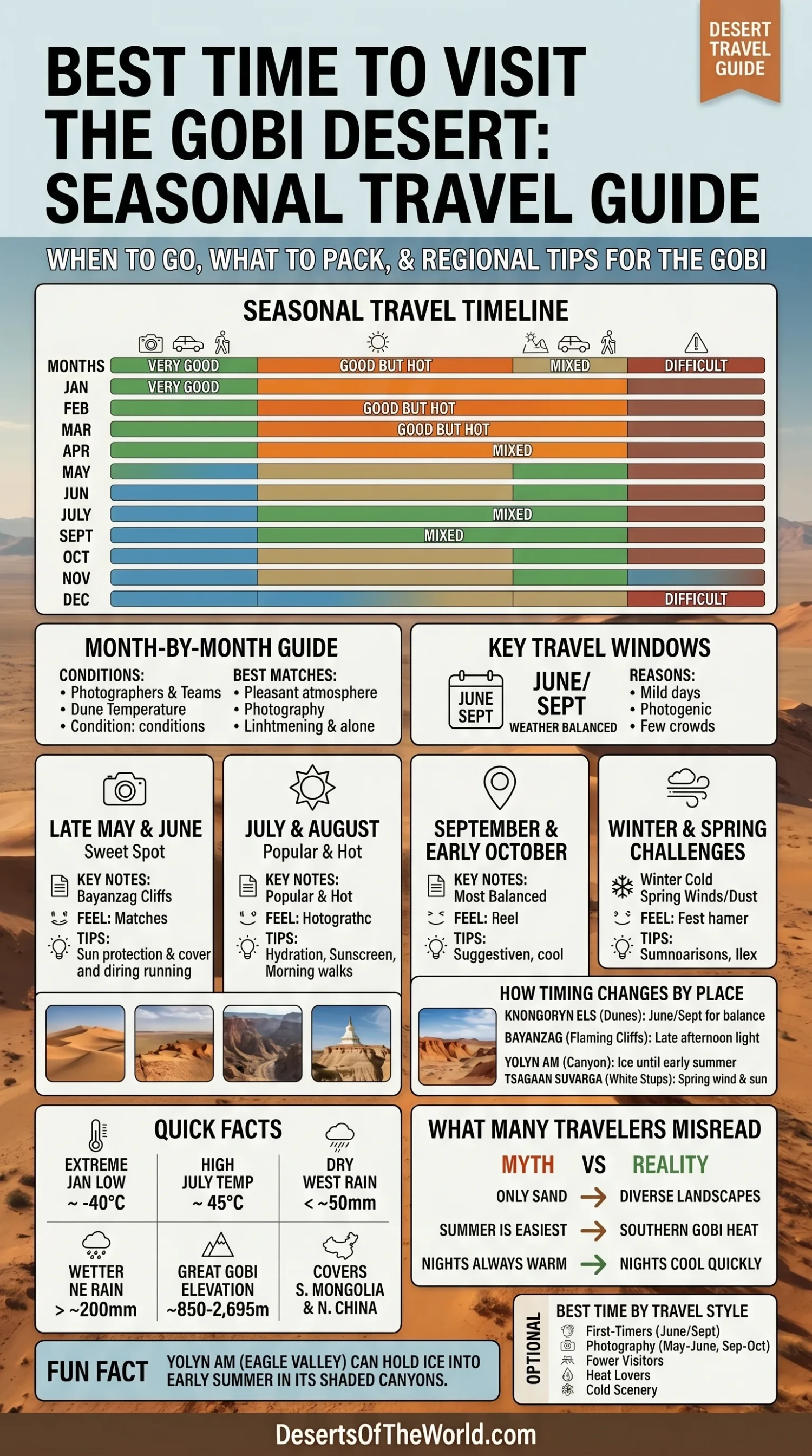
The Gobi is not only a sea of dunes. Much of it is open gravel plain, dry valley, mountain edge, clay basin, saxaul shrubland, canyon, and stony desert. That matters because timing changes by place. A trip to Khongoryn Els sand dunes does not feel the same as a walk in Yolyn Am, where shaded rock walls can hold ice into early summer. Same desert, different moods.
Best Months to Visit the Gobi Desert
| Period | Travel Comfort | Typical Desert Feel | Best For |
|---|---|---|---|
| Late May to June | Very good | Warm days, cool nights, greener steppe edges, fewer harsh heat hours | First-time visitors, photography, long drives, canyon walks |
| July to August | Good, but hot | Long daylight, peak travel season, very warm southern Gobi afternoons | Travelers who can handle heat and want full summer access |
| September to early October | Very good | Clearer air, cooler days, crisp nights, calmer travel rhythm | Comfortable desert touring, quiet routes, landscape photography |
| March to April | Mixed | Cold nights, dry air, strong winds, possible dust events | Flexible travelers who accept rougher weather |
| November to February | Difficult | Deep cold, short days, frozen ground, fewer services in remote areas | Special winter travel with local support |
Why Late May to June Works So Well
Late May and June often sit in the sweet spot for Gobi travel. The desert has warmed after winter, yet the hottest part of summer has not fully arrived. Days can be bright and dry. Nights still cool down, so a warm layer matters after sunset.
This period is especially useful for travelers who want to visit the classic southern Gobi route: Dalanzadgad, Bayanzag Flaming Cliffs, Khongoryn Els, and Yolyn Am. Road days are long in this part of Mongolia, and milder temperatures make those drives easier.
June also works well because the Gobi’s landscape has more texture than many first-time visitors expect. Low shrubs, open steppe margins, dry riverbeds, pale cliffs, dark mountain lines, and sand dunes all sit close enough to connect in one route. In cooler light, details show better. Harsh noon heat hides them.
What June Feels Like in the Desert
- Warm daytime conditions without the deepest summer heat.
- Cool evenings around ger camps and open plains.
- Good light for cliffs, dunes, and wide desert views.
- Better comfort for walking in canyons and dry valleys.
- Some wind is still possible, especially in open areas.
Why September to Early October Is Often the Most Comfortable Window
September may be the most balanced month for many visitors. The heavy heat of high summer starts to ease, but the land still carries warmth. Roads are usually more comfortable than in spring, and the desert often feels calmer.
Early October can also be good, especially for travelers who prefer cool air and fewer people. Nights can become cold, though. In higher places and shaded valleys, the season can turn fast. October is not late summer. It is early cold season arriving quietly.
For photography, September has a clean, dry feeling. The light often sits lower, the air feels sharper, and the color contrast between sand, rock, shrubs, and sky becomes easier to read. This is one reason many travelers choose autumn for the Gobi rather than midsummer.
What to Expect in September
- More comfortable afternoon temperatures than July and August.
- Cold evenings, especially in open plains and ger camps.
- Good visibility for dunes, cliffs, and long desert horizons.
- Fewer peak-season crowds on some routes.
- Less forgiving weather if a cold front passes through.
Visiting the Gobi Desert in Summer
Summer is the easiest season for many organized trips because services, ger camps, drivers, and domestic travel routes are more available. It is also the season when most travelers think of Mongolia: long days, open roads, and broad blue skies.
But July and August need realistic expectations. The Gobi is one of Mongolia’s hottest regions in summer, and midday heat can be tiring around exposed sites such as Khongoryn Els or Bayanzag. Shade is limited. The air is dry. Distances are large.
Travel still works well in summer when the day is planned around the desert’s rhythm: early movement, slower afternoons, and later walks when the light softens. It is simple, but it changes the trip.
July and August Are Best If You Are Ready For Heat
- Start exposed walks early in the morning or later in the day.
- Expect hot sand around dune areas.
- Carry enough water between stops; shops are not frequent outside towns.
- Use sun protection even when the air feels breezy.
- Pack a light warm layer because desert nights can still cool quickly.
Spring in the Gobi Desert
Spring is not one simple season in the Gobi. March can still feel winter-like. April brings more daylight, but also more wind. May becomes easier, yet it can still shift quickly from calm to dusty. This is the season where flexibility matters most.
The main spring issue is wind. The Gobi is known for dust and sand movement, especially when strong spring systems pass across Mongolia and northern China. Not every spring day is dusty, but travelers should not treat March and April like soft-weather months.
For most visitors, late May is a better spring choice than March or April. The land has started to warm, nights are less severe, and travel services become more practical. Earlier spring can still be rewarding, but it asks more from the traveler.
Who Should Consider Spring
- Travelers who want fewer visitors and can accept changing weather.
- People with a flexible route and an experienced local driver.
- Photographers who like wind-shaped skies and raw desert light.
- Visitors who do not mind colder nights and simpler services.
Winter in the Gobi Desert
The Gobi is a cold desert as much as a dry desert. Winter travel is possible, but it is not a casual version of the summer route. The climate can be severe, roads may be harder to judge, daylight is shorter, and remote services may be limited.
Winter can bring clean light, frozen ground, quiet camps, and a very different view of the desert. Still, first-time visitors usually get more value from May, June, September, or early October. Winter is better for travelers with a clear reason to go then and the right local support.
Winter Conditions to Understand
- Temperatures can drop far below freezing, especially at night.
- Wind can make open plains feel much colder than the thermometer suggests.
- Some tourist ger camps may close outside the main travel season.
- Remote driving needs planning, fuel awareness, and local knowledge.
- Warm clothing must cover hands, face, feet, and sleeping comfort.
Gobi Desert Climate and Travel Timing
The Gobi has a dry, strongly continental climate. That means large seasonal swings: cold winters, warm to hot summers, and sudden changes between day and night. The desert also receives low rainfall compared with greener parts of Mongolia, with drier western areas and slightly wetter northeastern areas.
Published climate references describe the Gobi as having average January lows that can reach around −40°C in severe winter settings and July highs that can climb near 45°C in hot conditions. Annual precipitation varies widely across the desert, from less than about 50 mm in parts of the west to more than about 200 mm toward the northeast.
These numbers explain why the best travel season is not simply “summer.” A desert trip depends on comfort at noon, warmth at night, wind exposure, road access, and the exact places included in the route.
How the Best Time Changes by Place
The Gobi covers a wide arc across southern Mongolia and northern China. In broad terms, the Mongolian travel route most visitors mean by “the Gobi” sits in southern Mongolia, especially around Ömnögovi Province. Even there, the route changes from flat desert to dune field to mountain gorge.
Khongoryn Els Sand Dunes
Khongoryn Els is one of the best-known dune areas in Mongolia. Summer heat can feel strong here because sand absorbs and reflects warmth. June and September usually give a better balance for walking, photography, and spending time near the dunes without planning everything around the hottest hours.
Bayanzag Flaming Cliffs
Bayanzag is famous for red-orange cliffs and fossil history. The site is exposed, with little shade. Late afternoon light gives the cliffs their strongest color, so the best months are not only about temperature. They are also about light, wind, and how comfortable it feels to stand outside while waiting for the color to change.
Yolyn Am
Yolyn Am, also called Eagle Valley, sits in the Gobi Gurvansaikhan range. It can feel much cooler than the open desert. Ice may remain in shaded sections into early summer. This makes June especially interesting: the wider desert is warm, but the valley can still carry a cold mountain-desert character.
Tsagaan Suvarga
Tsagaan Suvarga, often translated as White Stupa, is a wind-shaped cliff landscape in the Middle Gobi region. Spring winds can be strong on open ground, while summer sun can be harsh on the pale slopes. May, June, September, and early October are usually the more comfortable choices.
Month-by-Month Guide to Visiting the Gobi Desert
| Month | Travel Notes | Best Match |
|---|---|---|
| January | Very cold, quiet, and difficult for normal touring. | Special winter travel only |
| February | Still deep winter, with severe cold and limited comfort. | Experienced cold-weather travelers |
| March | Cold, dry, windy, and changeable. | Flexible routes with local support |
| April | More daylight, but wind and dust can affect travel. | Travelers who accept rougher spring weather |
| May | Improving comfort, cool nights, and the start of easier travel. | Early-season desert touring |
| June | One of the best months: warm, bright, and not yet at peak heat. | First-time Gobi visitors |
| July | Popular and fully open, but hot in the southern Gobi. | Summer travelers who can manage heat |
| August | Warm, active travel month; occasional rain can appear in parts of Mongolia. | Classic summer routes |
| September | One of the best months: cooler, clear, and comfortable. | Photography and quieter travel |
| October | Good early in the month, colder later; nights can bite. | Cool-weather desert trips |
| November | Cold season returns; fewer services in remote areas. | Specialist travel |
| December | Very cold, short days, and low visitor numbers. | Winter-focused trips only |
Best Time by Travel Style
For First-Time Visitors
Choose June or September. These months give the most balanced experience for the classic Gobi route. The weather is more forgiving, the landscapes are fully accessible in most normal travel plans, and you avoid the hardest heat and cold.
For Photography
Choose late May to June for fresh seasonal contrast, or September to early October for cleaner air and lower-angle light. Bayanzag, Khongoryn Els, and Tsagaan Suvarga all reward patient timing near sunrise or late afternoon.
For Fewer Visitors
Choose May, early June, September, or early October. These periods can feel calmer than midsummer, though availability still depends on the route and local operators.
For Heat-Loving Travelers
July and August can work, especially if you are comfortable in dry heat. Plan walks outside the hottest part of the day. The desert gives little shade, and exposed sites can feel hotter than the forecast suggests.
For Cold-Weather Desert Scenery
Winter has its own appeal: stillness, hard light, and pale open ground. Yet it is best treated as a special trip, not as a simple low-season bargain. Proper clothing, reliable transport, and local planning are part of the route.
What Many Travelers Misread About the Gobi
The first mistake is thinking the Gobi is only sand. It is not. The desert includes mountains, gravel plains, dry basins, cliffs, and steppe margins. Because of this, the “best time” changes from one stop to another.
The second mistake is thinking summer is automatically easiest. Summer has the most travel services, but it also brings the strongest heat in the southern Gobi. June and September often feel better than the middle of summer.
The third mistake is ignoring night temperatures. Even in warm months, the desert cools after sunset. A thin jacket may be enough in some periods, but in May, September, and October, a real warm layer belongs in the bag.
How Long Daylight and Distance Affect the Season
Gobi trips often involve long drives between sites. A route that looks short on a map can take hours because roads may be unpaved, sandy, rocky, or simply slow across open country. The season affects how those drives feel.
Longer daylight in June, July, and August helps with travel pacing. Cooler months give better walking comfort, but shorter daylight means tighter timing. In September, the balance is strong: still enough light, less heat, and a calmer travel tempo.
What to Pack by Season
Late May to June
- Light daytime clothing with sun coverage.
- Warm layer for evenings and early mornings.
- Windproof outer layer for open plains.
- Sunglasses, hat, and lip protection.
- Comfortable walking shoes for sand, gravel, and canyon paths.
July to August
- Breathable long-sleeve clothing for sun protection.
- Wide-brim hat or cap with neck coverage.
- Reusable water bottle or hydration system.
- Light warm layer for night.
- Scarf or buff for wind and dust.
September to Early October
- Warm fleece or insulated mid-layer.
- Windproof jacket.
- Gloves and beanie for cold mornings in October.
- Layered clothing for warm afternoons and cold nights.
- Closed shoes with good grip for cliffs and dry valleys.
Winter
- Insulated coat rated for severe cold.
- Thermal base layers.
- Warm hat, gloves, scarf, and thick socks.
- Cold-weather boots.
- Extra battery protection for phones and cameras.
Gobi Desert Weather Is Local
One forecast cannot describe the whole Gobi. Elevation, valley shade, wind exposure, and distance from mountain ranges all change the feel of a day. The Great Gobi Biosphere Reserve, for example, ranges from about 850 to 2,695 meters above sea level. That kind of elevation spread affects temperature, wind, vegetation, and wildlife habitat.
This is why a good Gobi travel plan should not only ask, “Which month is best?” It should also ask:
- Will the route focus on dunes, cliffs, canyons, or protected areas?
- How many hours of driving are planned each day?
- Will the trip include high valleys or mostly exposed plains?
- Are ger camps open on the chosen route?
- Is the traveler comfortable with cold nights or hot afternoons?
Best Time for the Classic Southern Gobi Route
For the classic southern Mongolia route, the most reliable travel windows are:
- Best overall: June and September.
- Also good: late May and early October.
- Popular but hot: July and August.
- More difficult: March, April, November, December, January, and February.
If the trip includes Bayanzag, Khongoryn Els, and Yolyn Am, June gives a strong first visit. September gives a cooler, quieter version of the same route. Both months respect the desert better than a fixed “summer is best” answer.
Best Time for a Gobi Desert Trip With Children or Older Travelers
For families, older travelers, or anyone who wants a softer pace, choose June or September. These months reduce the chance of tiring heat while keeping the route practical. Long drives are still part of the Gobi, so comfort matters more than chasing the hottest summer days.
July and August can still work with careful pacing, but exposed sites should be planned for morning or late afternoon. March, April, and winter are less suited to travelers who need predictable comfort.
Best Time for Wildlife and Desert Ecology
The Gobi supports more life than its dry surface suggests. Protected desert and mountain-steppe areas provide habitat for species such as wild Bactrian camel, argali wild sheep, Siberian ibex, goitered gazelle, and Gobi bear in remote zones. Most visitors will not see rare animals, and they should not expect to. The value is in understanding the habitat: oases, dry valleys, mountain edges, and sparse vegetation all matter.
For general nature observation, late spring and early autumn are more comfortable than high summer. Early morning is often the best part of the day. The desert is awake then, before heat and wind flatten the mood.
When Not to Visit the Gobi Desert
There is no month when the Gobi is completely off-limits, but some periods are harder for ordinary travel.
- March and April can bring strong winds, dust, and cold nights.
- Midday in July and August can be tiring around exposed dune and cliff sites.
- Late October to March can bring deep cold and reduced remote services.
If comfort is the main goal, avoid the hardest edges of the year. Choose June or September. Simple advice, and it holds up well.
Practical Season Notes Before Booking
- Check whether ger camps on the exact route are open for your dates.
- Ask about daily driving time, not only distance.
- Confirm whether the route uses domestic flights, overland driving, or both.
- Plan exposed walks for morning or late afternoon in hot months.
- Bring layers in every season; the Gobi can change quickly after sunset.
- Expect limited shade at dunes, cliffs, and open desert viewpoints.
- Do not rely on a single regional forecast for the whole route.
Sources
- Britannica – Gobi Desert (location, size, landforms, climate background, and physical geography)
- Britannica – Gobi Climate (temperature range, dry continental climate, and precipitation variation)
- NASA Earth Observatory – Gobi Desert Dust (spring dust movement and Gobi sandstorm context)
- UNESCO – Great Gobi Biosphere Reserve (elevation range, protected desert habitat, and wildlife)
- UNESCO World Heritage Centre – Desert Landscapes of the Mongolian Great Gobi (protected area context and Great Gobi landscape information)
- Visit Mongolia – Short Gobi Desert Tour (common southern Gobi route, Bayanzag, Khongoryn Els, Yolyn Am, and travel-season notes)