
The best time to visit the Atacama Desert is usually April to May or September to November. These months give most travelers the easiest mix of clear desert weather, workable daytime temperatures, cold but manageable nights, and good conditions for classic places around San Pedro de Atacama. For stargazing, the dry winter months can be excellent too, as long as you are ready for very cold nights.
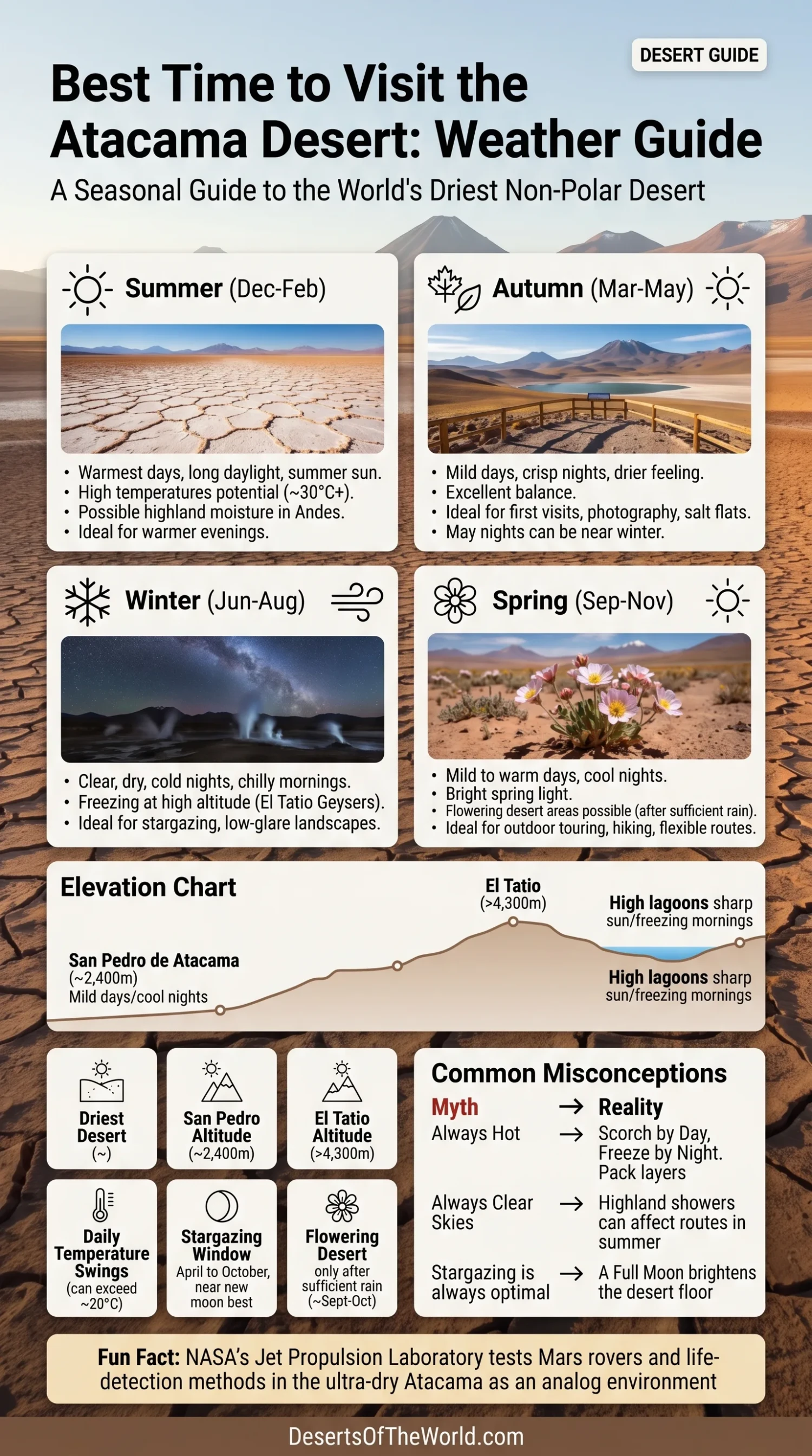
The Atacama is not a single flat desert with one simple weather pattern. San Pedro de Atacama sits high in northern Chile, and many well-known outings climb even higher toward Andean lagoons, salt flats, volcanoes, and geysers. A sunny afternoon can feel warm in town, then the same day can turn sharply cold before sunrise at El Tatio. That daily swing is the real weather story here.
Best Time to Visit the Atacama Desert
For a first visit, choose April, May, September, October, or November. These months are the safest all-round choice for Valle de la Luna, Salar de Atacama, Laguna Chaxa, highland lagoons, desert viewpoints, and night-sky tours.
June, July, and August are also strong months, especially for travelers who care more about dry air and clear skies than warm evenings. The trade-off is simple: the colder the night, the more serious your layers need to be.
| Period | Weather Feel | Best For | What to Watch |
|---|---|---|---|
| December to February | Warmest daytime weather, cool nights, stronger summer sun | Travelers who prefer warmer evenings and long daylight | Possible summer moisture in highland areas, busier holiday periods, hotter midday walks |
| March to May | Mild days, crisp nights, drier feeling after summer | First-time visits, photography, salt flats, valleys, easier touring weather | May nights can feel close to winter, especially outside town |
| June to August | Clear, dry, cold nights and chilly early mornings | Stargazing, low-glare landscapes, travelers who dislike heat | Freezing conditions before sunrise at high-altitude sites such as El Tatio |
| September to November | Mild to warm days, cool nights, bright spring light | Outdoor touring, hiking, photography, and the active 2026 flowering-desert season farther south in the Atacama Region | Sun and wind can feel stronger than the air temperature suggests |
Month-by-Month Weather Around San Pedro de Atacama
The ranges below are practical planning bands for the San Pedro de Atacama area, not a live forecast. Nearby valleys, salt flats, and high Andean sectors can feel very different on the same day.
| Month | Daytime Feel | Nighttime Feel | Travel Notes |
|---|---|---|---|
| January | Warm to hot in open sun | Cool rather than warm | One of the warmer months; highland showers are more likely than in the dry season |
| February | Warm, bright, and dry-feeling in town | Cool | Summer moisture can still affect mountain routes and lagoons |
| March | Warm but usually easier than midsummer | Cool to crisp | A good bridge month if you want warmth without the strongest summer feel |
| April | Mild to warm | Crisp | One of the best months for balanced weather and clear views |
| May | Mild during the day | Cold after sunset | Dry, settled, and good for daytime touring; pack real night layers |
| June | Comfortable in sun, cool in shade | Cold | Strong for stargazing, but early tours need gloves and a warm jacket |
| July | Cool to mild | Often very cold | Often the coldest-feeling month, mainly before sunrise and after dark |
| August | Mild in the afternoon | Cold | Good dry-season month; wind and dust can matter on exposed routes |
| September | Mild to warm | Cool | A strong month for outdoor routes, salt flats, and evening light |
| October | Warm in sun | Cool | One of the easiest months for a broad itinerary; the 2026 flowering desert is active farther south |
| November | Warm, sometimes hot at midday | Cool | Good before the main summer rhythm begins; some 2026 flowering may continue into the second half of the month |
| December | Warm to hot | Cool | Long daylight and warmer evenings, with more demand around holiday dates |
Why Weather in the Atacama Changes So Much
The Atacama Desert is known as the driest non-polar desert on Earth, yet a traveler should not read that as “the same weather everywhere.” The region is shaped by the Pacific coast, the Chilean Coastal Range, the Andes, salt basins, high plateaus, and dry valleys. Elevation changes the day fast.
San Pedro de Atacama is already around 2,400 meters above sea level. El Tatio rises to more than 4,300 meters. The air is thinner there, the morning is colder, and the sun can still feel sharp once it climbs over the mountains. A small distance on the map can mean a large change in comfort.
| Area | Weather Character | Best Planning Detail |
|---|---|---|
| San Pedro de Atacama | Dry air, warm afternoons, cold nights, strong sun | Use it as the base climate, then adjust colder for highland trips |
| Valle de la Luna And Cordillera de la Sal | Exposed sun, bright rock and salt, afternoon wind | Morning and late afternoon feel better than the middle of the day |
| Salar de Atacama And Laguna Chaxa | Glare from salt surfaces, open wind, cool evenings | Sunglasses and wind layers matter more than many visitors expect |
| Miscanti And Miñiques Lagoons | High-altitude cold, bright sun, fast weather shifts | Dress for cold air even when the sky is clear |
| El Tatio Geysers | Very cold before sunrise, high elevation, dry air | Thermal layers, hat, gloves, and slow movement help the morning feel easier |
| Coastal Atacama And Llanos de Challe | Cooler coastal air, fog influence, and an active flowering-desert season in 2026 | October is the main 2026 viewing period, with some species expected to flower into November |
Best Season For a First Visit
April to May is the most comfortable window for many first-time travelers. Summer heat starts to ease, the summer-rain risk in the highlands is lower, and the desert often has crisp visibility. In April, the days can still feel warm. By May, nights turn much colder.
September to November works just as well for a broad route. Days become warmer, daylight feels generous, and the spring angle of light suits the salt flats, red valleys, and volcanic horizons. October is especially easy to work with if the goal is a classic Atacama trip without leaning too far into heat or winter cold.
If the itinerary includes several high-altitude stops, avoid rushing. A calm first day around San Pedro or Valle de la Luna helps many travelers adjust before going higher. Not every beautiful place has to be visited on day one.
Best Time For Stargazing
The Atacama is one of the great desert regions for astronomy because the air is dry, many nights are clear, and large areas sit far from heavy light pollution. For travelers, the best stargazing period is often April through October, with June to August offering long nights and a very dry feel.
The moon matters. A full moon can brighten the desert so much that faint stars and the Milky Way lose contrast. For darker skies, look for dates close to the new moon. If the trip is built around astrophotography, moon phase can be as important as the month.
Winter nights can be beautiful, but they are not soft. Standing outside for a sky tour in July feels very different from walking through town at lunchtime. Bring a warm hat, gloves, thick socks, and a jacket that blocks wind.
Best Time For El Tatio Geysers
El Tatio is a pre-dawn experience. The steam looks most visible when the morning air is cold, which is why many tours leave San Pedro very early. Weather-wise, the best months are often April to November, when skies are usually drier and access tends to be more predictable than during the summer highland-rain period.
Cold is part of the place. Even when San Pedro feels pleasant in the afternoon, El Tatio can feel freezing before sunrise. The site is also far higher than town, so walk slowly and keep expectations simple: warm clothing first, photos second.
Best Time For Valle de la Luna And Salt Landscapes
Valle de la Luna, the Cordillera de la Sal, and nearby viewpoints can be visited year-round. The easiest weather comes in March to May and September to November. The sun is still strong, but the air is less punishing than in midsummer and less cold than in winter evenings.
For these exposed landscapes, time of day matters more than the month. Midday can flatten the light and make the salt-and-clay ground feel harsh. Late afternoon usually gives better shadows and a gentler walking rhythm. Morning works well too, especially for travelers who prefer fewer people and cooler air.
Best Time For High-Altitude Lagoons
The highland lagoons, including Miscanti and Miñiques, sit in a colder Andean setting than San Pedro. The clean blue water, pale grasses, volcanic slopes, and salt-edged basins often look calm in photos, but the air can be thin, windy, and cold.
April, May, September, October, and November usually offer the best balance. Winter can bring clear skies and fine visibility, yet the cold becomes more serious. Summer can be warmer, but highland showers may affect access or visibility. For these routes, check the weather locally the day before and again in the morning.
Best Time For the Flowering Desert
The flowering desert is not centered on the classic San Pedro route. It occurs farther south in the Atacama Region, where dormant annual plants and geophytes respond to sufficient winter rainfall.
The 2026 Desierto Florido season is now active. Regional authorities officially launched the season in Freirina on October 2, 2026. The first flowers had appeared during the second half of August, and larger flowering fields became visible from the first half of September.
Based on CONAF and SBAP estimates, germplasm activation could cover at least 17,667 km², equal to about 23% of the Atacama Region. The period of greatest flower diversity and abundance is expected around mid-October. More than 200 native annual and geophyte species can emerge during the phenomenon, and some species may continue flowering into the second half of November.
Current viewing areas identified for the strongest displays include Pampa Caracoles, Parque Nacional Desierto Florido, the Ruta 5–Pajaritos sector near the Totoral toll, Quebrada Totoral, Parque Nacional Llanos de Challe, and the Freirina coast.
Visitors should stay on established roads and marked trails, avoid driving or walking through flower fields, and keep pets away from sensitive flowering areas. Access can still vary by location, so local road and protected-area information should be checked before travel.
Summer Weather: December to February
Summer brings the warmest overall feel. Days are long, evenings are less cold, and the town of San Pedro has an active travel rhythm. If you like warmer weather and do not mind bright midday sun, summer can work well.
The catch is the highland weather. Northern Chile can receive summer moisture from the Andean side, often called the Altiplanic winter or Bolivian winter. That does not mean every day is rainy. It means the higher routes, lagoons, and mountain roads deserve more caution. A valley may stay dry while clouds build over the Andes.
In summer, plan exposed walks early or late. Use the middle of the day for shade, meals, museum stops, or short transfers. The desert rewards patience.
Autumn Weather: March to May
Autumn is one of the cleanest travel seasons for the Atacama Desert. March still carries some warmth. April feels balanced. May starts to lean toward winter at night.
This period suits travelers who want valleys, salt flats, lagoons, and sky tours in one trip. The weather usually feels steady enough for a varied itinerary, and the light can be very clear after the sharper summer period fades.
For many visitors, April is the easiest single-month answer. Warm enough by day, cold enough to feel like a high desert at night, not as severe as winter.
Winter Weather: June to August
Winter in the Atacama is dry, bright, and cold after dark. Daytime sightseeing can be comfortable in the sun, but the temperature drops quickly once the light goes. Shade feels cold. Wind feels colder.
This season is excellent for travelers who care about stargazing, long night skies, and lower heat stress during daytime walks. It is less comfortable for anyone who dislikes freezing early starts. El Tatio, in particular, needs winter clothing even if the rest of the trip feels manageable.
Pack as if two climates share the same suitcase: desert sun for the afternoon, mountain cold for the morning.
Spring Weather: September to November
Spring brings warmer afternoons, cool nights, and a lively feel to the desert routes. It is one of the best periods for a mixed itinerary: Valle de la Luna, Salar de Atacama, highland lagoons, short hikes, and night-sky tours can all fit well if the forecast cooperates.
September still carries some winter chill at night. October 2026 also coincides with the active Desierto Florido season farther south in the Atacama Region, with the greatest diversity and abundance expected around mid-month. November starts to hint at summer, while some flower species may remain visible into the second half of the month.
Around San Pedro, the main spring landscape remains dry valleys, salt flats, volcano views, and clear air. The flowering areas are several hours farther south and should be planned as a separate regional route rather than a short excursion from San Pedro.
What to Pack For Atacama Weather
- Layered clothing: light shirt for the day, fleece or warm mid-layer for evening, jacket for wind and cold mornings.
- Sun protection: sunglasses, brimmed hat, sunscreen, and lip balm. The dry air and high sun work quietly.
- Cold-weather extras: gloves, warm socks, and a hat for El Tatio, winter stargazing, and highland lagoons.
- Footwear: closed walking shoes with grip for salt, dust, rock, and uneven ground.
- Water bottle: dry air makes thirst easy to underestimate.
- Small daypack: useful for removing and adding layers as the temperature changes.
Weather Mistakes to Avoid
Thinking Desert Means Hot All Day
The Atacama can be warm at midday and cold at night. That contrast is normal. A traveler dressed only for heat will feel the mistake before sunrise.
Ignoring Elevation
San Pedro is high, and many excursions go much higher. The weather forecast for town does not fully describe El Tatio or the highland lagoons. Add colder layers for every route that climbs toward the Andes.
Planning Stargazing Without Checking the Moon
A clear night is not always a dark night. Around full moon, the desert floor glows and the sky loses depth. For faint stars and Milky Way views, choose dates near the new moon when possible.
Treating the Flowering Desert as Guaranteed Every Year
The bloom depends on rainfall and does not appear with the same extent every spring. In 2026, however, the season is active, and official monitoring identifies broad flowering areas across the Atacama Region. Conditions can still vary locally, so flower-focused trips should use current protected-area and road information.
Simple Month Picks by Travel Style
| Travel Goal | Best Months | Why These Months Work |
|---|---|---|
| First Atacama Trip | April, May, September, October | Balanced daytime weather, cold but workable nights, good range of route options |
| Stargazing | April to October, near new moon | Drier feel, long winter nights in midyear, darker skies when the moon is low |
| Warmest Evenings | December to March | Less severe night cold, though midday sun and summer highland moisture need planning |
| Highland Lagoons | April, May, September, October, November | Better balance between cold, access, visibility, and lower summer storm risk |
| El Tatio Geysers | April to November | Cold mornings make steam more visible; drier months often suit early access better |
| Flowering Desert Areas | October 2026, with some flowering expected into the second half of November | The season is active, with the greatest diversity and abundance expected around mid-October |
How Many Days Need Good Weather?
A short Atacama stay can work, but weather flexibility improves the trip. Three full days allow a simple pattern: one day for Valle de la Luna and nearby salt landscapes, one for Salar de Atacama or lagoon routes, and one for a higher-elevation trip if the forecast looks stable.
Four or five days feel better if stargazing is a priority. Night tours can be affected by clouds, wind, or moonlight, and having more than one possible evening gives the sky room to cooperate.
For summer travel, extra flexibility also helps with highland routes. If clouds or rain affect the Andes, lower desert areas may still be workable.
Does the Atacama Desert Get Rain?
Yes, but not in the way many travelers expect. The Atacama is extremely dry, especially in its central desert areas, yet rain can still fall in some sectors and seasons. Around San Pedro, the main travel concern is usually not long rainy days in town. It is the chance of summer moisture affecting higher Andean roads, lagoons, and remote routes.
Rain also explains the flowering desert farther south. Seeds and underground plant structures can remain dormant through long dry periods, then respond when enough moisture arrives. The active 2026 Desierto Florido followed unusually wet winter conditions in parts of the Atacama Region.
Is the Atacama Desert Too Hot in Summer?
Summer is hot in open sun, but it is not a humid tropical heat. The dry air changes how it feels. You may feel fine while walking, then notice later that the sun has taken more energy than expected.
For December to February, choose early starts, shade breaks, and late-afternoon viewpoints. Keep the most exposed walking out of the hottest part of the day. Simple, but it works.
Is Winter Too Cold For the Atacama Desert?
Winter is not too cold for travel if you pack correctly. Many days are bright and comfortable in the sun. The problem comes before sunrise, after sunset, and at high elevation.
Winter suits travelers who prefer crisp air, dark nights, and less heat during daytime walks. It does not suit a light suitcase. For El Tatio or night-sky tours, cold-weather clothing is not optional.
Best Overall Weather Choice
If you want one clean answer, choose April or October. Both months usually give a strong balance of daylight, dry desert feel, manageable nights, and broad access to the classic Atacama landscapes.
For travel during October 2026, there is an additional seasonal option farther south: the active Desierto Florido, with its strongest diversity and flower abundance expected around mid-month.
If stargazing is the main reason for the trip, choose a dry-season month and plan around the new moon. If high-altitude lagoons matter most, lean toward the shoulder months. If warmer evenings matter most, choose summer but keep the highland rain pattern in mind.
Sources
- Chile Travel: San Pedro de Atacama (official tourism notes on clothing, altitude, cold nights, and seasonal demand)
- Chile Travel: Best Time to Travel to San Pedro de Atacama (official travel-season context for San Pedro de Atacama)
- Chile Travel: Tatio Geysers (official details on El Tatio, sunrise conditions, and elevation above 4,300 meters)
- CONAF: Reserva Nacional Los Flamencos (official protected-area information for sectors around San Pedro de Atacama)
- CONAF: Parque Nacional Llanos de Challe (official context on coastal Atacama vegetation and the flowering desert phenomenon)
- CONAF: Desierto Florido 2026 (official visitor guidance and information on more than 200 annual and geophyte species associated with the phenomenon)
- Sernatur: Official Launch of the 2026 Desierto Florido Season in Freirina (active season status, 17,667 km² estimate, mid-October peak period and current viewing areas)
- Gobierno Regional de Atacama: Desierto Florido 2026 (early-season bloom timing, Caldera-to-Freirina monitoring, road recovery and viewing areas)
- Chile Travel: Flowering Desert 2026 (spring travel areas and flowering-desert visitor information)
- Meteoblue: Climate Data For San Pedro de Atacama (modeled climate patterns, elevation, temperature, precipitation, sunshine, and wind)
- NASA Jet Propulsion Laboratory: Ultra-Dry Atacama Desert (scientific context on the Atacama as the driest non-polar desert and Mars-analog terrain)
- ALMA Observatory: How ALMA Sees (astronomy context for the high, dry Atacama environment)