
Desert clothing has one simple job: help the body handle sun, dry air, wind, rough ground, and sharp temperature changes. A hot desert can feel like an open oven at midday, then cool fast after sunset. A cold desert may look dry and bright during the day, yet feel biting once wind moves across open ground. Good packing is not about carrying more clothing. It is about carrying the right layers.
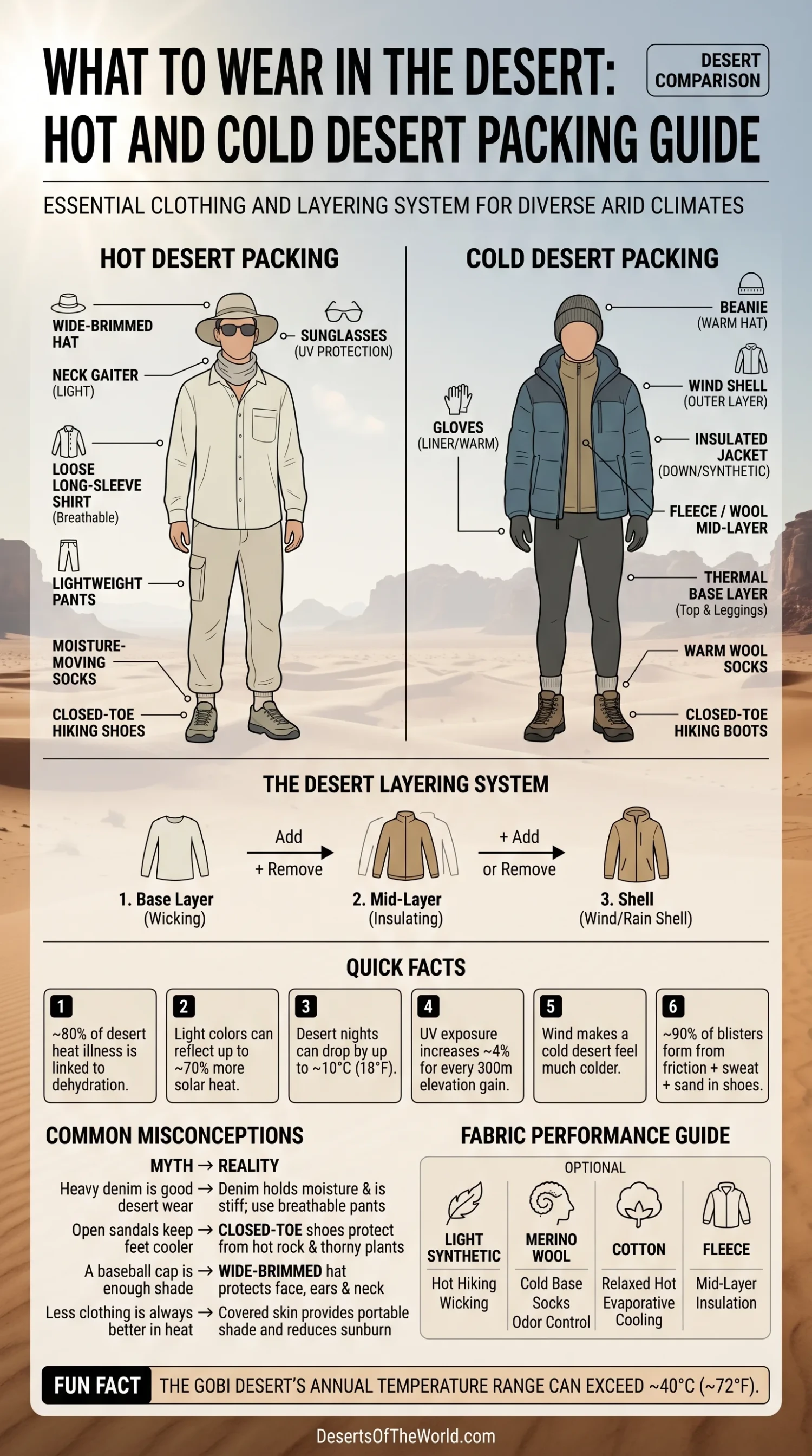
For most desert trips, the safest clothing system starts with light sun protection for the day and warm layers for early morning, evening, altitude, or winter conditions. The desert rewards preparation. It also exposes weak packing very quickly.
What To Wear In The Desert
| Desert Condition | Best Clothing Choice | Why It Helps |
|---|---|---|
| Hot, Sunny Day | Loose long-sleeve shirt, light long pants, brimmed hat, sunglasses | Reduces direct sun exposure while allowing air to move around the body |
| Cold Morning Or Night | Base layer, fleece or wool mid-layer, insulated jacket, warm hat | Traps warmth in layers that can be removed as the day warms |
| Windy Desert Plain | Wind shell, neck gaiter, close-fitting eyewear | Blocks blowing sand, dust, and wind chill |
| Rocky Desert Trail | Closed-toe hiking shoes or boots, durable socks, long pants | Protects feet and legs from stone, thorny plants, and uneven surfaces |
| High-Elevation Desert | Sun layers plus a warm jacket, gloves, and shell | Handles strong UV exposure, thin air, and fast cooling after sunset |
Why Desert Clothing Is Different
A desert is not only a hot place. It is a dry environment where rainfall is limited and exposed ground can heat and cool quickly. Some deserts are hot for much of the year, such as parts of the Sahara, Arabian Desert, Sonoran Desert, and Mojave Desert. Others are cold deserts, such as the Gobi, Great Basin, Patagonian Desert, and polar desert areas.
That matters because clothing has to solve two problems that seem opposite: overheating during the day and cooling too fast after sunset. The same open sky that lets sunlight strike the ground can also allow heat to escape at night. In many dry landscapes, the temperature drop feels abrupt.
Pack for the desert as if you are dressing for two climates in one day. Often, you are.
Sun Exposure Is The First Clothing Problem
In a shaded forest, trees do some of the work for you. In a desert, shade may be rare, low, or far apart. Clothing becomes portable shade.
For hot desert days, wear:
- A loose long-sleeve shirt in a light color
- Lightweight long pants rather than short shorts
- A wide-brimmed hat or desert-style sun hat
- Sunglasses with UV protection
- A neck gaiter, scarf, or sun hood for the back of the neck
- Sunscreen on exposed skin that clothing does not cover
Short sleeves can feel cooler for a few minutes, but they expose more skin. In desert sun, covered skin is often more comfortable over time, especially when the fabric is breathable and loose.
Dry Air Changes How Clothing Feels
Dry air helps sweat evaporate quickly. That can cool the skin, but it also means people may not notice how much fluid they are losing. Clothing that vents well matters. So does avoiding heavy, tight fabric that traps heat.
The best desert outfit usually feels airy, not bare. Think of a thin layer of moving shade around the body. That is the goal.
Wind Can Make A Desert Feel Colder Than Expected
Open desert basins, plateaus, salt flats, and dune fields can be windy. Wind moves heat away from the body and can push sand or dust against the skin. A thin wind shell weighs little, but it can make a cold desert evening far more comfortable.
Hot Desert Clothing
Hot desert clothing should protect skin, reflect sunlight, and let heat escape. The best pieces are usually simple: loose, light-colored, breathable, and easy to layer.
Shirts For Hot Deserts
A long-sleeve sun shirt is one of the most useful pieces of desert clothing. Choose a shirt that is light, breathable, and not too tight. A collar helps shade the neck. Vent panels or roll-up sleeves can help, but the fabric should still cover well.
Look for these features:
- Light colors such as white, sand, beige, pale gray, or light khaki
- Loose fit around the torso and arms
- Long sleeves with cuffs that stay in place
- A collar or hood for neck shade
- Fabric labeled for sun protection, where available
Avoid thick black shirts in strong sun. Dark fabric can absorb more heat, and tight dark clothing can feel punishing on exposed trails.
Pants For Hot Deserts
Long pants protect the legs from sun, rock, brush, and hot surfaces. They also help in desert areas with thorny plants such as cactus, acacia, creosote bush, saltbush, or other low scrub.
Good desert pants should be:
- Lightweight but not flimsy
- Loose enough for easy movement
- Breathable in warm weather
- Durable enough for rock, sand, and low vegetation
- Easy to roll or vent when temperatures rise
Shorts are not always wrong, especially for short walks in managed visitor areas. For exposed desert walking, long pants usually serve better.
Hats For Hot Deserts
The head, face, ears, and neck need shade. A baseball cap shades the eyes, but it leaves the ears and neck exposed. A wide-brimmed hat works better in open desert.
Useful hat options include:
- Wide-brimmed hiking hat
- Sun hat with neck cape
- Lightweight desert scarf with a brimmed cap
- Ventilated hat with a secure chin cord for wind
A hat should stay on in wind. If it flies off every few minutes, it is not desert-ready.
Neck Protection
The back of the neck burns fast in open sun. A neck gaiter, buff, bandana, or light scarf can solve that. In hot dry places, some travelers dampen a cloth when water is safely available. The cooling effect can feel pleasant, but do not rely on wet fabric as your only heat plan.
Sunglasses and Eye Protection
Desert light reflects from pale sand, rock, salt crust, gypsum dunes, and dry lakebeds. Sunglasses are more than comfort gear. They help reduce glare and protect the eyes from UV exposure.
Choose sunglasses that:
- Offer UV protection
- Fit close enough to reduce side glare
- Stay secure while walking
- Work with your hat brim
In windy areas, wraparound glasses or side shields can help keep dust away from the eyes.
Cold Desert Clothing
Cold deserts are dry, open, and often windy. They may have hot-looking sunlight during the day, but the air can still feel cold. The Gobi Desert, Great Basin Desert, high parts of the Atacama region, and Patagonian drylands can all remind visitors that desert does not mean tropical.
Cold desert clothing should use layers. One thick coat is less flexible than several thinner pieces. Layers let you adjust when the sun warms the ground, then add insulation when evening arrives.
Base Layer
The base layer sits next to the skin. In cold desert conditions, choose merino wool or synthetic fabric that moves moisture away from the body. A damp cotton shirt can feel cold once the temperature drops or wind rises.
For cold desert mornings and nights, pack:
- Long-sleeve thermal top
- Thermal leggings or long underwear
- Moisture-moving underwear
- Warm socks made from wool or synthetic blends
Mid-Layer
The mid-layer holds warmth. Fleece, wool, or a light insulated pullover works well. This is the layer you may remove once the sun gets high.
In many desert regions, a mid-layer gets used more than expected. It may sit in the pack all afternoon, then become the first thing you reach for at dusk.
Insulated Jacket
An insulated jacket is useful for cold desert nights, high plateaus, winter visits, and stargazing stops. Down jackets pack small and feel warm for their weight, but they need care in wet conditions. Synthetic insulation handles moisture better, though it may be bulkier.
For car-based desert travel, a warmer jacket is easy to carry. For hiking, choose one that packs down without taking over your bag.
Wind Shell Or Rain Shell
A shell layer blocks wind. In cold deserts, wind can make mild air feel much colder. A thin shell also helps during blowing sand or light rain.
Look for:
- Wind resistance
- Simple hood
- Enough room to fit over a fleece
- Secure pockets
- Adjustable cuffs
Gloves, Beanie, and Neck Warmth
Small warm items matter in cold desert weather. A beanie, light gloves, and a neck warmer can change the whole feel of a dawn walk or night photography stop.
These items take little space:
- Thin liner gloves
- Warm beanie or wool cap
- Neck gaiter
- Warm socks for evening use
Footwear For Desert Ground
Desert ground can be sandy, rocky, salty, crusted, or covered with loose gravel. Footwear should match the surface. Open sandals may be fine near a lodge, boardwalk, or short viewpoint path, but they are rarely the best choice for longer desert walking.
Best Shoes For Desert Walking
Closed-toe hiking shoes are the most flexible option for many desert trips. They protect the toes, grip rock, and handle sand better than casual sneakers. In rough canyons, volcanic terrain, or thorny desert scrub, light hiking boots may be better.
Choose footwear with:
- Closed toes
- Good tread on dry rock and gravel
- Enough sole protection for sharp stones
- Breathable uppers for hot conditions
- Room for foot swelling during long hot walks
Foot swelling is common in heat. Shoes that feel tight at home may feel tighter after hours in warm desert conditions.
Socks Matter More Than Many People Think
Socks protect the foot from friction. In desert conditions, blisters can form quickly when sweat, sand, and heat work together.
Pack socks that are:
- Moisture-moving
- Comfortable under your chosen shoes
- Not too thick for hot weather
- Clean and dry for overnight use
Wool-blend hiking socks often work well because they manage moisture and odor better than plain cotton. For very hot day walks, thinner hiking socks may feel better than heavy trekking socks.
Gaiters For Sand and Gravel
Low gaiters keep sand, grit, and small stones out of shoes. They are useful on dunes, dry washes, volcanic gravel, and long sandy tracks. Not always necessary, but very welcome when sand keeps creeping into your footwear.
Fabric Choices For Desert Clothing
Fabric choice depends on heat, cold, wind, activity level, and whether you will stay out after sunset. No single fabric wins every desert condition.
| Fabric | Best Use | Watch For |
|---|---|---|
| Light Synthetic | Hot hiking shirts, pants, base layers | Some fabrics hold odor; choose breathable pieces |
| Merino Wool | Cold desert base layers, socks, sleep layers | Can be warmer and more delicate than synthetics |
| Cotton | Short, dry, hot settings where cooling is useful | Can feel cold when damp after sunset or in wind |
| Linen | Relaxed hot-weather wear in towns, lodges, and shaded areas | Less durable on rough trails |
| Fleece | Cold desert mid-layer | Needs a shell in strong wind |
| Down Or Synthetic Insulation | Cold nights, winter deserts, high-elevation deserts | Too warm for active hiking in direct sun |
When Cotton Can Help
In hot, dry conditions, cotton can feel cooling because it holds moisture and lets evaporation happen slowly. That is why a loose cotton shirt may feel pleasant during a short, dry, low-risk outing.
But cotton becomes a poor choice when conditions turn cold, windy, or wet. If a desert day includes a long hike, high elevation, winter weather, or an overnight camp, synthetic or wool layers are safer for warmth management.
Why Loose Fit Beats Tight Fit
Tight clothing can trap heat and rub against the skin. Loose clothing lets air move. In desert sun, that small gap between fabric and skin acts like a buffer.
Loose does not mean oversized to the point of snagging. The best fit allows movement, airflow, and coverage without flapping heavily in wind.
Hot Desert Packing List
This list fits warm desert regions where sun and heat are the main concerns: low-elevation parts of the Mojave, Sonoran, Sahara, Arabian, Thar, and Australian deserts, depending on season and local weather.
Clothing To Wear
- Loose long-sleeve sun shirt
- Lightweight long pants
- Wide-brimmed hat
- UV-protective sunglasses
- Breathable underwear
- Moisture-moving hiking socks
- Closed-toe hiking shoes
Clothing To Pack
- Thin wind shell
- Light fleece or warm layer for evening
- Extra socks
- Bandana, scarf, or neck gaiter
- Spare shirt for longer trips
- Light gloves if handling rough rock or trekking poles
For hot deserts, keep clothing light and protective. Bare skin is not the same as comfort. More often, it is an invitation for sunburn and fatigue.
Cold Desert Packing List
This list fits dry, open regions where cold, wind, altitude, or winter conditions matter: the Gobi, Great Basin, Patagonian Desert, high Atacama areas, and many desert plateaus.
What To Wear In A Cold Desert
- Moisture-moving base layer
- Durable hiking pants
- Long-sleeve shirt or light mid-layer
- Warm socks
- Closed-toe hiking shoes or boots
- Sun hat or beanie, depending on time of day
- Sunglasses
What To Pack For A Cold Desert
- Fleece or wool mid-layer
- Insulated jacket
- Wind shell or rain shell
- Beanie
- Gloves
- Neck warmer
- Dry sleep socks for overnight trips
Cold desert packing is about control. Add a layer before you are chilled, remove one before you sweat heavily, and keep one dry layer for later.
Clothing For Different Desert Landscapes
Desert terrain changes the packing list. A sandy dune field does not dress the same as a rocky canyon, a salt flat, or a high desert basin.
| Landscape Type | Clothing Focus | Useful Add-On |
|---|---|---|
| Sand Dunes | Light coverage, secure hat, breathable shoes | Low gaiters to keep sand out |
| Rocky Desert | Durable pants, closed shoes, sun sleeves | Light gloves for rough stone |
| Salt Flats | Strong eye protection, full sun coverage | Wraparound sunglasses |
| High Desert Plateau | Sun layers plus warm layers | Wind shell and beanie |
| Dry Wash Or Canyon | Foot protection and abrasion-resistant clothing | Shoes with grip on stone |
Sand Dunes
Dunes reflect light, absorb heat, and let sand enter shoes easily. Wear breathable closed shoes and consider low gaiters. A secure hat is useful because dunes are often windy.
Very loose scarves can be annoying in strong wind. Keep neck protection simple and easy to adjust.
Rocky Canyons and Badlands
Rocky desert terrain can scrape shoes, pants, and hands. Thin fashion fabrics may tear fast. Long pants and a durable shirt help protect against rough stone and low vegetation.
Closed footwear matters here. Sandals leave toes exposed to rock edges.
Salt Flats and Pale Desert Surfaces
Salt flats, gypsum dunes, and pale dry lakebeds can create intense glare. Sunglasses become a core item, not an accessory. A brimmed hat also helps reduce eye strain.
Choose full coverage. Light comes from above and below.
High Deserts
High deserts can combine strong sun with cool air. This mix tricks people. You may not feel hot, but UV exposure still reaches skin. Wear sun layers during the day and carry insulation for evening.
What Not To Wear In The Desert
Some clothing looks fine before the trip and fails once the desert does what deserts do: sun, wind, grit, heat, and temperature swings.
- All-black tight clothing: It can absorb heat and limit airflow.
- Open sandals for rough trails: They leave feet exposed to hot ground, rock, and sharp plants.
- Heavy denim in hot weather: It can feel stiff, warm, and slow to dry.
- Thin fashion sunglasses: They may not give enough UV protection or side coverage.
- A hat with no wind security: Open desert wind can remove it fast.
- Only summer clothing for overnight trips: Many deserts cool sharply after sunset.
Desert Clothing For Overnight Trips
Overnight desert packing needs more care than a short day visit. Once the sun drops, clothing that felt perfect at noon may not be enough.
For desert camping or long evening stays, add:
- Dry base layer for sleeping
- Warm socks used only at camp
- Insulated jacket
- Beanie
- Wind shell
- Long pants or thermal leggings
Keep one set of warm layers dry. Do not hike hard in every warm piece you own and then expect those damp layers to feel good at night.
Desert Clothing For Children
Children need the same desert clothing logic as adults: shade the skin, protect the head and eyes, and keep warm layers ready when temperatures drop.
Good choices include:
- Light long-sleeve shirt
- Light long pants
- Brimmed hat with a strap
- Child-sized sunglasses with UV protection
- Comfortable closed shoes
- Warm layer for evening
Simple clothing works best. If a child keeps removing a hat because it is scratchy, heavy, or too hot, the better option is a lighter hat they will actually wear.
Desert Clothing For Photography, Stargazing, and Sunrise Visits
Many desert visitors go out early for sunrise, stay late for stars, or stand still for photography. Standing still makes the body cool faster than walking. Pack warmer layers than you would for a short moving walk.
For sunrise or night use, bring:
- Insulated jacket
- Beanie
- Gloves thin enough to use a camera or phone
- Warm socks
- Wind shell
Before sunrise, the desert can feel quiet and cold. Then the sun rises and the layers come off one by one. That is normal desert dressing.
How To Layer In The Desert
Layering is not only for snow. It is one of the cleanest ways to dress for desert temperature swings.
Warm Or Hot Day Layering
- Start with a breathable shirt
- Add long pants for sun and scratch protection
- Use a brimmed hat and sunglasses
- Carry a thin wind shell
- Carry one light warm layer if you may stay into evening
Cold Desert Layering
- Base layer to manage moisture
- Mid-layer for warmth
- Insulated jacket for stops and night
- Shell for wind
- Hat, gloves, and neck warmer for exposed areas
The trick is to avoid sweating heavily in cold conditions. Sweat cools fast in wind. Remove a layer before you overheat, then put it back on when you stop.
Desert Packing By Trip Length
| Trip Type | Wear | Pack |
|---|---|---|
| Short Viewpoint Stop | Sun shirt, hat, sunglasses, comfortable shoes | Light layer if windy or near sunset |
| Half-Day Walk | Long sleeves, long pants, hiking socks, closed shoes | Extra socks, neck cover, wind shell |
| Full-Day Hike | Full sun coverage, durable shoes, breathable layers | Warm layer, shell, spare socks, extra shirt |
| Overnight Trip | Sun layers plus trail footwear | Dry base layer, insulation, beanie, gloves, warm socks |
| Winter Desert Visit | Base layer, pants, mid-layer, sun hat or beanie | Insulated jacket, gloves, shell, neck warmer |
Small Clothing Details That Make A Large Difference
Use Pockets Carefully
Desert clothing with secure pockets is helpful for small items, but avoid overloading pockets with heavy objects. They can rub while walking. Zippered pockets are best for windy areas.
Choose Colors That Stay Visible
Light colors help with heat, but clothing should still be easy to see in open terrain. Pale sand, white salt, and beige rock can make some outfits blend into the background. A light shirt with a visible hat, scarf, or jacket color can be practical without feeling loud.
Protect Ankles
Low shoes can work well, but sand and grit enter easily. Crew-height socks or low gaiters protect ankles and reduce rubbing.
Keep A Dry Layer Separate
For long walks or overnight stays, pack one warm item in a dry bag or separate pouch. It feels like a small detail until the wind rises.
Desert Wear For Managed Trails, Dunes, and Visitor Areas
Not every desert visit is a remote expedition. Many desert parks and protected areas have short trails, boardwalks, viewpoints, marked paths, and visitor areas. Even there, clothing should respect the conditions.
For short managed paths, wear:
- Comfortable closed shoes
- Sun hat
- Sunglasses
- Light shirt with shoulder coverage
- Light pants or longer shorts
If the path is paved and short, sandals may be acceptable in some places. If the path crosses sand, rock, or brush, closed shoes are better.
Desert Clothing Checklist By Body Area
| Body Area | Hot Desert | Cold Desert |
|---|---|---|
| Head | Wide-brimmed sun hat | Sun hat by day, beanie by night |
| Eyes | UV-protective sunglasses | Sunglasses for glare, clear glasses for wind if needed |
| Neck | Light gaiter, scarf, or collar | Neck warmer or buff |
| Torso | Loose long-sleeve sun shirt | Base layer, mid-layer, insulation, shell |
| Legs | Light long pants | Durable pants plus thermal layer if needed |
| Feet | Breathable closed shoes and hiking socks | Closed shoes or boots with warm socks |
| Hands | Optional sun gloves or light gloves | Liner gloves or insulated gloves |
Common Packing Mistakes
Packing Only For Midday Heat
Many people pack for the hottest hour and forget the coldest one. Desert mornings, evenings, and shaded canyons can feel much cooler than expected.
Choosing Bare Skin Over Sun Coverage
Less fabric does not always mean more comfort. In desert sun, long breathable layers often feel better than exposed skin after the first hour.
Ignoring Wind
A thin shell may look unnecessary under blue sky. Then the wind starts. On open desert ground, that shell becomes one of the best items in the pack.
Wearing New Shoes
New footwear can rub badly in heat. Break shoes in before a desert walk. Sand and sweat make small fit problems worse.
Forgetting Spare Socks
Socks are small, light, and very useful. A dry pair can save a walk from becoming uncomfortable.
Sources
- U.S. National Park Service: Ten Essentials (sun protection, clothing, and outdoor safety items)
- U.S. National Park Service: Beat The Heat (heat clothing, sun protection, water, and hot-weather activity guidance)
- U.S. National Park Service: Winter Hiking Tips (layering, warm outer layers, sunglasses, sunscreen, and winter trail preparation)
- Centers For Disease Control And Prevention: Extreme Heat Protection (loose, lightweight, light-colored clothing and sunscreen in hot conditions)
- National Weather Service: Heat Safety (light-colored loose clothing, hats, sunscreen, and heat exposure reminders)
- NASA Science: Desert Biome (desert temperature differences between day and night)
- University Of California Museum Of Paleontology: The Desert Biome (desert climate patterns, cool nights, and dry conditions)