
Desert blooms are brief wildflower events that appear after the right mix of rain, mild temperatures, seed readiness, and calm weather. A desert may look bare for most of the year, then soften into yellow, purple, pink, white, or orange patches for a few weeks. The change feels sudden, but the work began long before the flowers opened. Hidden under the gravel, sand, washes, and alluvial fans, a living seed bank has been waiting.
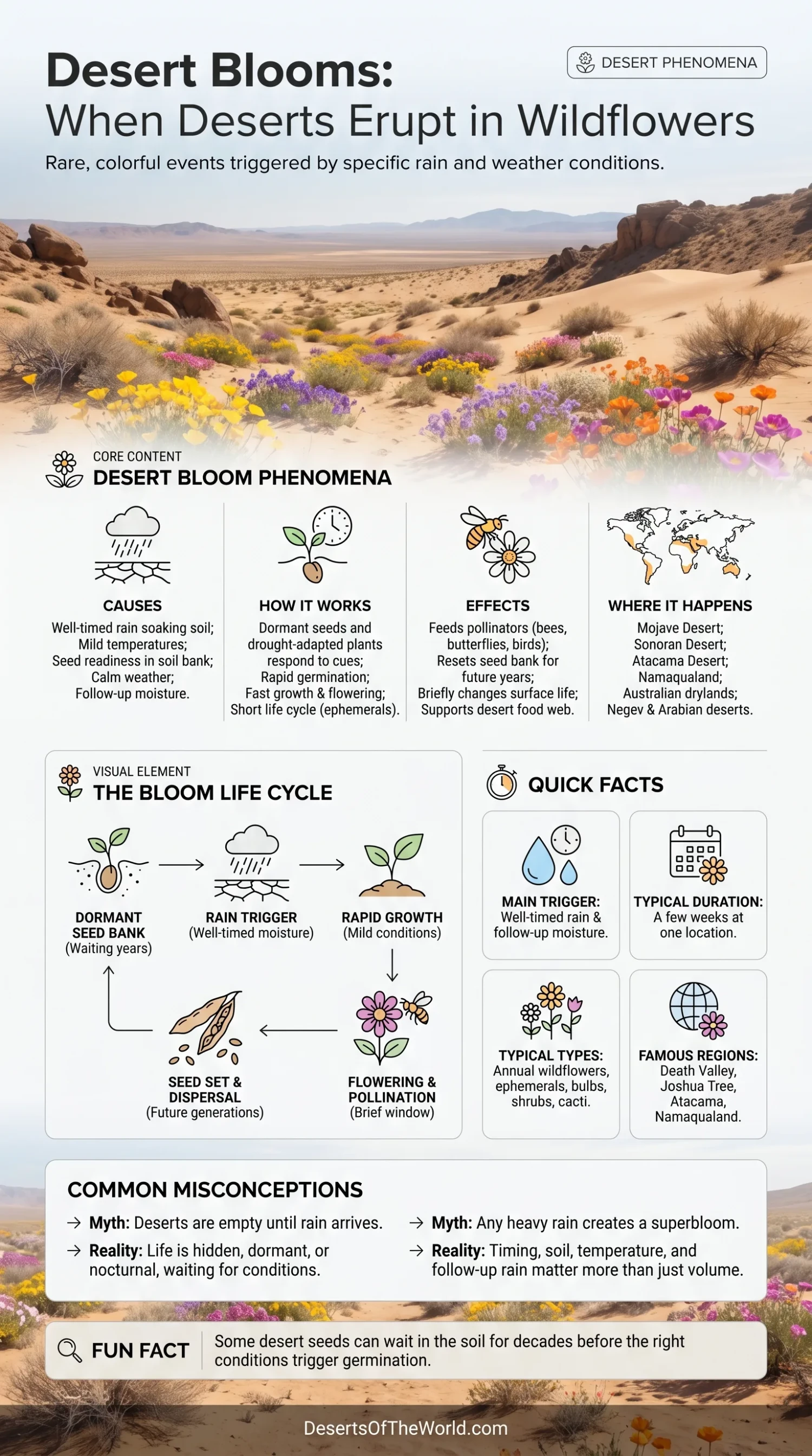
Desert Blooms: Main Details
| Feature | What It Means |
|---|---|
| Main Trigger | Well-timed rain that soaks into the soil and supports germination, growth, and flowering. |
| Best-Known Deserts | Mojave Desert, Sonoran Desert, Atacama Desert, Namaqualand, Western Australian drylands, and parts of the Negev and Arabian deserts. |
| Typical Flower Types | Annual wildflowers, desert ephemerals, shrubs, bulbs, cacti, and drought-adapted perennials. |
| Bloom Duration | Often a few weeks at one elevation, with bloom timing moving upward as lower areas warm and dry. |
| Why Some Years Are Bare | Rain may arrive too early, too late, too hard, too lightly, or be followed by heat, drying winds, or cold snaps. |
| Ecological Role | Flowers feed pollinators, set seed for future years, and briefly change the surface life of dry landscapes. |
What Is a Desert Bloom?
A desert bloom happens when dormant seeds and drought-adapted plants respond to rare favorable conditions. In many deserts, the showiest flowers come from annual plants. These plants live fast. They sprout, grow, flower, make seed, and fade before heat and dryness return.
This is why desert wildflowers are often called ephemerals. The word means short-lived, and it fits. A patch of desert gold or sand verbena may brighten a wash for a short time, then fade after flowering and seed production. Viable seeds can remain in the soil until another suitable wet season.
The event can be scattered or broad. Some years bring only small clumps along roadsides, washes, rocky slopes, or shaded pockets. Other years bring wide carpets of color across valley floors and lower hillsides. When the bloom is unusually dense and spread across a large area, people often call it a superbloom.
Bloom, Superbloom, and Flowering Desert
The terms can confuse readers because they are not always used in the same way. A normal bloom may still be beautiful, but it covers limited ground or appears in pockets. A superbloom is larger, denser, and more visible across the landscape. In Chile, the Atacama bloom is often known as the desierto florido, or flowering desert.
| Term | Best Use | What Visitors Usually See |
|---|---|---|
| Desert Bloom | Any seasonal flowering event in a desert or dryland. | Flowers in washes, slopes, flats, roadsides, or protected pockets. |
| Wildflower Bloom | A general term for visible flowering plants, often annuals. | Mixed species, usually changing by elevation and week. |
| Superbloom | A rare, unusually wide and dense bloom. | Large fields or hillsides of flowers, sometimes visible from far away. |
| Flowering Desert | Often used for the Atacama Desert bloom in Chile. | Large color patches after rare winter rain, especially in parts of the Atacama Region. |
Not every good year deserves the word superbloom. The label is useful for general readers, but nature does not follow a neat marketing category. A small bloom in the right canyon can be more interesting than a crowded valley floor.
Why Deserts Can Bloom So Suddenly
Desert blooms look sudden because most of the life is hidden until the right window opens. Seeds may rest in the soil for years. Some have protective coatings. Some need enough moisture to soften the coat. Others respond to temperature, light, soil disturbance, or chemical signals from rainwater.
The soil may hold seeds from several species and age classes. Only a portion germinates in a given wet season because moisture, temperature, seed condition, and local soil conditions differ.
The Seed Bank Under the Desert Floor
A seed bank is the stored collection of viable seeds in the soil. In deserts, this seed bank is not a backup detail. It is the main survival plan for many annual wildflowers.
Seeds can wait through dry years because waiting is safer than sprouting at the wrong time. If a seed germinates after a light shower and no follow-up rain arrives, the seedling may dry out before it flowers. So desert plants often rely on several cues, not rain alone.
- Enough moisture must reach the seed zone.
- Mild temperatures help seedlings grow without immediate heat stress.
- Follow-up rain keeps young plants alive after germination.
- Low wind damage helps flowers stay open long enough for pollination.
- Pollinator activity helps many species set seed for future bloom years.
Rain Timing Matters More Than Rain Alone
A desert does not bloom well just because it receives one large storm. Gentle, soaking rain often helps more than a violent downpour. Heavy rain can run off hard desert surfaces, carve channels, or move seed into washes before roots can hold.
The timing also matters. In many North American deserts, fall or winter rain sets up spring annuals. If rain arrives early and then stops, seedlings may fail. If rain arrives late, plants may not have enough cool growing time before heat rises. If the season stays mild after rain, flowers often last longer.
Soil, Elevation, and Slope Create Bloom Patterns
Desert blooms rarely spread evenly. They follow subtle landforms. A sandy wash, gravel fan, bajada, limestone slope, clay pan, or volcanic plain may each support different plants.
Elevation creates another pattern. Lower desert floors warm first, so they often bloom earlier. Mid-elevation slopes may follow later. Higher valleys, canyons, and mountain edges can bloom weeks after the lowlands have already set seed.
This staggered rhythm explains why one part of a desert may look finished while another is just beginning.
Desert Plant Adaptations for Short Bloom Windows
Desert flowers are specialized for short periods of favorable moisture and temperature. Their life cycles allow growth, flowering, and seed production to happen before dry conditions return.
Annual Wildflowers
Annual desert flowers complete their life cycle in one season. Many of the famous bloom carpets come from annuals such as desert gold, phacelia, sand verbena, poppies, evening primrose, desert dandelion, lupine, and pincushion flowers.
These plants may stay small, flower quickly, and direct much of their energy into seed production before the soil dries.
Perennials and Shrubs
Perennial plants survive from year to year through roots, stems, bulbs, or woody structure. They may bloom after rain, but they do not depend on restarting from seed each time. Brittlebush, creosote bush, globemallow, ocotillo, and many desert sages can add color outside the main annual carpet season.
Some perennials show little visible growth during dry months and flower strongly after rain. A grey, dry-looking shrub may carry yellow, orange, or red flowers once moisture and temperature conditions improve.
Cacti and Succulents
Cacti blooms are different from annual carpets. Many cactus flowers are large, bright, and short-lived. Some open for only a day or night. They often appear later than low-elevation annuals, especially when warmer weather arrives.
In deserts where cacti are common, these blooms support bees, birds, bats, moths, and other pollinators. In saltier or harsher basins, cacti may be less common, while small annuals and hardy shrubs do more of the seasonal work.
Where Desert Blooms Are Famous
Desert blooms appear in many drylands, but a few regions are especially well known for broad flowering displays tied to unusual rainfall seasons.
Mojave Desert: Death Valley, Joshua Tree, and Dry Basins
The Mojave Desert is one of the best-known places for North American desert blooms. Death Valley National Park can produce striking low-elevation flower shows after cool-season rain. In strong years, desert gold and purple phacelia may color alluvial fans, roadsides, and valley edges.
Joshua Tree National Park shows a more elevation-based pattern. Lower areas may bloom earlier, while higher desert slopes and valleys flower later. The mix can include Arizona lupine, desert Canterbury bells, desert dandelion, brittlebush, globemallow, paintbrush, and other species.
The Mojave also shows why bloom predictions are hard. A single park can have strong flowers in one basin, scattered flowers in another, and almost none on exposed hardpan.
Death Valley’s 2026 Superbloom
Death Valley National Park recorded a superbloom in spring 2026. Above-average rain during fall and winter 2025 produced low-elevation sprouts by December, and additional rain in early 2026 kept the plants growing. Scattered flowers appeared in late February, then expanded rapidly in early March. By early to mid-March, broad areas along Badwater Road carried desert gold and phacelia, producing the yellow and purple hillsides associated with the park’s superbloom years.
The main low-elevation display was brief. Early high temperatures shortened the dense flowering period to about two weeks, and the park reported that the superbloom was over by the end of March. Scattered low-elevation flowers remained after the peak, while higher elevations began flowering in April as the seasonal bloom moved upslope.
The National Park Service lists 2026, 2016, 2005, and 1998 as Death Valley’s most recent superbloom years. The 2026 display was not as dense as some earlier superblooms, but park observations noted a wide variety of species. From September through November 2025, Death Valley measured 2.41 inches of rain, including a record 1.76 inches in November. Even with that unusually wet setup, the final display still depended on follow-up moisture, warming conditions, and the timing of spring heat.
Sonoran Desert: Winter Rain, Spring Color, and Summer Storms
The Sonoran Desert stretches across parts of Arizona, California, Sonora, Baja California, and nearby drylands. It can receive both winter rain and summer monsoon moisture, which gives it a different bloom rhythm from many deserts.
Spring annuals often depend on cool-season rain. Later, summer storms can trigger other growth and flowering, especially among perennials and plants adapted to warm-season moisture. This dual-rain pattern helps explain the Sonoran Desert’s varied plant life compared with drier deserts.
Atacama Desert: The 2026 Flowering Desert of Chile
The Atacama Desert is famous for extreme dryness, yet parts of it can bloom after rare winter rain. This event is often called the desierto florido, or flowering desert. Pink, purple, yellow, white, blue, and red flowers may appear across parts of northern Chile, especially where seed banks and soil moisture line up.
For 2026, extraordinary July rainfall set up a new flowering season in the Atacama Region. The first blooms were already appearing in parts of the region by the second half of August. Regional authorities expect the geographic spread to increase through September, with the greatest diversity and flower abundance projected around mid-October. Monitoring covers areas from Caldera to Freirina, and some roads damaged by the winter rain remain under repair, so visitors are being directed toward designated viewing areas and open routes.
The Atacama can support dormant seeds and drought-adapted plants through long dry periods. When enough rain reaches suitable soils, visible growth and flowering can develop quickly.
Namaqualand: Spring Flowers in a Dry South African Landscape
Namaqualand, in western South Africa, is known for spring flower displays after winter rain. The region is not a classic dune desert in every part, but it belongs to a dry, flower-rich landscape where rainfall timing, cool temperatures, and sunlight shape the season.
Many flowers open best on sunny days and may face the sun, which changes how a field looks by time of day. Cloud cover, temperature, and sunlight can therefore affect how much color is visible during a visit.
Australian Drylands: Outback Flowers After Good Rain
Australian deserts and semi-arid lands can bloom after well-timed rain, especially where annuals, daisies, peas, and other native plants respond to moisture. Sturt’s desert pea is one of the most recognized desert flowers, though many smaller species form wide seasonal color patches.
As in other deserts, rain alone is not enough. Soil type, follow-up moisture, grazing pressure, temperature, and local seed supply all shape the final display.
Common Desert Bloom Species and Plant Groups
Each desert has its own flora, so no single list covers every bloom. Still, several plant groups appear again and again in desert flower seasons.
| Plant Group | Typical Role in Bloom Events | Example Regions |
|---|---|---|
| Annual Wildflowers | Create many of the broad color carpets after rain. | Mojave, Sonoran, Atacama, Namaqualand, Australian drylands. |
| Desert Shrubs | Add longer-lasting patches of yellow, orange, red, or white flowers. | Mojave, Sonoran, Chihuahuan, Arabian drylands. |
| Bulbs and Geophytes | Use underground storage organs to survive dry periods. | Namaqualand, Mediterranean-climate desert edges, some Australian regions. |
| Cacti and Succulents | Produce bold flowers, often later or in shorter windows. | Sonoran, Chihuahuan, Mojave, parts of South America. |
| Grasses and Forbs | Briefly green the ground and support insects and seed-eating animals. | Drylands worldwide after rain. |
Why Desert Blooms Do Not Happen Every Year
Rain does not work like a simple switch for desert flowers. Several conditions have to line up during the same growing season.
A bloom may fail or stay small when:
- Rain is too light to reach the seed zone.
- Rain comes in one hard storm and runs off quickly.
- Warm weather arrives before seedlings mature.
- Strong winds dry soil or damage young flowers.
- Cold snaps slow growth after germination.
- There are too few viable seeds in a disturbed area.
- Insects or grazing animals consume many seedlings before they flower.
Desert bloom years also vary by scale. One valley may have a strong season while a nearby plain remains mostly bare. Soil, elevation, storm tracks, wind exposure, and seed distribution can produce different outcomes over short distances.
The Ecological Value of Desert Blooms
Desert blooms provide temporary food and reproductive opportunities for plants, insects, birds, and other animals.
Pollinators Arrive Fast
Bees, butterflies, moths, flies, beetles, hummingbirds, and other pollinators may use bloom years heavily. Some insects time their life cycles around plant growth. In large bloom years, flowers can attract pollinators to places that may have little visible flowering vegetation during dry periods.
Pollination helps plants set seed. Those seeds refill the soil bank for later years. The flowering stage may be brief, but successful seed production can influence future bloom seasons.
Seeds Feed Desert Animals
After flowers fade, seeds become food for birds, rodents, ants, and other desert animals. Some seeds are eaten. Some are moved. Others may be buried or carried into new locations.
The same bloom that feeds pollinators during flowering can therefore continue supporting desert animals after petals have disappeared.
Plants Help Hold Soil
Even short-lived plants can slow surface movement for a time. Roots hold fine soil. Stems reduce wind at ground level. Plant litter adds small amounts of organic matter.
These effects are temporary and localized, but they form part of the normal ecological cycle of many dry landscapes.
How Weather Shapes the Color and Length of a Bloom
A bloom can change quickly after flowering begins because temperature, wind, cloud cover, and follow-up rain continue to affect the plants.
- Warm days can open flowers and speed growth.
- Too much heat can shorten the season.
- Cool nights can help flowers last longer, as long as frost is not damaging.
- Dry wind can wilt petals and dry soil fast.
- Light follow-up rain can extend flowering in some places.
- Cloudy days may keep certain flowers partly closed.
Bloom reports can therefore change within days. A dense patch of flowers may pass peak condition quickly after a period of hot, dry, or windy weather.
Where Flowers Appear Across Desert Landscapes
Wildflower distribution often reflects where water moved, where soils retained moisture, and where viable seeds were already present.
Washes and Alluvial Fans
Dry washes often carry water for a short time after storms. They may also collect seeds and fine sediment. This makes them common bloom corridors. Alluvial fans, where material spreads from canyon mouths, can also support strong flower patches when moisture spreads through gravelly soil.
Rocky Slopes and Bajadas
Rocky slopes may look harsh, but stones can shade soil and slow evaporation. Some flowers grow between rocks where small moisture pockets last longer. Bajadas, the broad slopes below mountains, can show bands of color because water, soil depth, and exposure shift gradually downhill.
Salt Flats and Clay Pans
Not all open flats bloom well. Salt, hard crusts, poor drainage, and soil chemistry can limit plants. Some species tolerate these conditions, but many annual wildflowers prefer sandy or gravelly soils away from the harshest salt zones.
Desert Blooms and Climate Patterns
Large bloom years often follow unusual seasonal moisture. In some regions, ocean-atmosphere patterns such as El Niño can shift storm tracks and increase the chance of winter rain. This does not guarantee a bloom. Other local conditions still determine whether seedlings survive long enough to flower.
Long-term climate change may affect bloom timing, heat stress, pollinator timing, and drought length. The effects will not be identical in every desert. Some places may experience altered rain timing, while others may dry faster after storms.
A flower that opens before its main pollinator is active may set less seed. A seedling that sprouts after early rain may fail if heat arrives too soon. These timing differences can affect plants with short seasonal life cycles.
Responsible Wildflower Viewing
Desert blooms can attract large numbers of visitors during strong flowering years. Many annuals grow close to the ground, and young seedlings can be difficult to see before they flower.
A person stepping away from a trail may crush plants before flowering or seed production. Tire tracks can also remain visible for long periods on crusted or lightly vegetated desert surfaces.
- Stay on marked trails, roads, and durable surfaces.
- Do not pick flowers; leave them to feed pollinators and make seed.
- Keep vehicles on legal roads and parking areas.
- Watch for small plants before setting down bags, tripods, or picnic items.
- Give wildlife space, including insects and birds using the bloom.
- Check park rules before visiting protected desert areas.
Low-impact viewing helps protect flowers, soils, seed production, and future bloom cycles.
Best Time of Year for Desert Blooms
There is no single global bloom month. Desert bloom timing depends on hemisphere, elevation, rainfall season, and plant type.
| Region | Common Bloom Window | Main Pattern |
|---|---|---|
| Death Valley and Low Mojave Desert | Late winter to early spring in good years. | Low elevations first, then higher slopes and canyons later. |
| Joshua Tree and Higher Mojave Areas | Spring, often later at higher elevations. | Elevation controls timing and species mix. |
| Sonoran Desert | Spring after winter rain; some later flowering after summer storms. | Two rainfall seasons can support varied bloom patterns. |
| Atacama Desert | Usually spring after rare winter rainfall. | Large events depend on unusual moisture and local seed banks. |
| Namaqualand | Late winter to spring in the Southern Hemisphere. | Winter rain supports spring flower displays. |
| Australian Drylands | Varies by region; often after good seasonal rain. | Rain timing and local plant communities shape the display. |
Why Some Desert Flowers Stay Small
Visitors sometimes expect tall fields like meadow flowers. Desert flowers often behave differently. Many stay low to the ground to reduce wind exposure and conserve energy. Small leaves reduce water loss. Short stems let a plant flower with less stored moisture.
Some of the densest or most varied flower patches remain close to the ground, so many species are easier to notice at close range.
Desert Blooms and Color Patterns
Color patterns often come from dominant species. A yellow hillside may be mostly desert gold, brittlebush, or desert sunflower. A purple wash may be phacelia, lupine, or another violet-blue annual. White evening primrose may brighten sandy flats, while orange globemallow may mark drier slopes.
A field that appears mostly yellow from a distance may contain smaller white, pink, blue, and purple flowers between the dominant plants. Species diversity is often easier to see at close range.
What Happens After the Flowers Fade?
After peak bloom, petals drop, stems dry, and seed pods mature. Seed maturation is an essential part of the event because it replenishes the soil seed bank.
Dry stems can stand for a while, then break down. Seeds fall, blow, wash into low spots, or get moved by animals. Some germinate in the next suitable wet year. Others remain dormant longer.
A bloom season can add new seed to the soil bank and support later flowering years.
Common Misunderstandings About Desert Blooms
“Deserts Are Empty Until Rain Arrives”
Deserts contain plants, animals, microorganisms, dormant seeds, and other forms of life even when little vegetation is visible. Rain makes some seasonal growth much easier to see.
“Any Heavy Rain Creates a Superbloom”
Heavy rain can help, but only if it arrives at the right time and is followed by workable conditions. Fast runoff may provide little lasting moisture for seeds on hard ground.
“A Bloom Covers the Whole Desert”
Most blooms are patchy. Soil, slope, elevation, wind, seed supply, moisture, and shade all influence where flowers appear.
“Flowers Are Gone When the Color Fades”
When petals fade, seed production may still be underway. Plants can remain ecologically active after the most visible flowering period has ended.
Frequently Asked Questions About Desert Blooms
What Causes a Desert Bloom?
A desert bloom happens when dormant seeds or drought-adapted plants receive enough moisture, suitable temperatures, and enough time to grow and flower. Follow-up rain and mild weather often help the bloom last longer.
What Is a Superbloom?
A superbloom is an unusually dense and wide desert wildflower event. The term has no single official scientific definition, so not every colorful bloom is classified as a superbloom.
How Long Do Desert Blooms Last?
Many blooms last only a few weeks at one location. Heat, wind, lack of follow-up rain, and elevation can shorten or extend the season. Death Valley’s main 2026 low-elevation superbloom lasted only about two weeks before early heat ended the densest flowering period.
Was There a Death Valley Superbloom in 2026?
Yes. The National Park Service records 2026 as a Death Valley superbloom year. Scattered flowers appeared in late February, flowering became much more abundant in early March, and fields of desert gold and phacelia developed along Badwater Road by early to mid-March. The main low-elevation superbloom ended by the close of March as temperatures rose.
Can the Atacama Desert Really Bloom?
Yes. Parts of the Atacama Desert can flower after rare winter rainfall. The event is often called the flowering desert in Chile.
Why Do Some Desert Blooms Happen at Higher Elevations Later?
Higher elevations warm more slowly. As lower desert floors dry out, mid- and high-elevation slopes may still hold enough moisture for later flowering.
Are Desert Flowers Safe to Touch or Pick?
It is better not to touch or pick them. Flowers feed pollinators and need to make seed. Some plants can also irritate skin, and protected areas may prohibit collecting wildflowers.
Do Deserts Bloom Every Year?
Some flowers may appear in many years, but broad bloom displays do not happen every year. Rain timing, temperature, wind, and seed readiness all have to line up.
Sources
- National Park Service – Death Valley Wildflowers (2026 superbloom timing, recent superbloom years, desert annuals, seed dormancy, and elevation-based bloom periods)
- National Park Service – Record Rainfall in Death Valley National Park (fall 2025 rainfall records and the wet conditions that preceded the 2026 bloom)
- National Park Service – Joshua Tree Wildflower Viewing (rain timing, elevation zones, and common Mojave Desert wildflowers)
- U.S. Geological Survey – Ecology of Death Valley National Park (Death Valley ecology, desert plant survival, and rare wildflower bloom conditions)
- Arizona-Sonora Desert Museum – Predicting Desert Wildflower Blooms (rainfall timing, seasonal moisture, and bloom prediction in the Sonoran and Mojave deserts)
- NASA Earth Observatory – Atacama Greening (Atacama rainfall, rain shadow setting, and rare greening after moisture)
- Gobierno Regional de Atacama – Desierto Florido 2026 (2026 flowering forecast, Caldera-to-Freirina monitoring area, road conditions, and designated viewing points)
- Chile Travel – Flowering Desert 2026 (current bloom observations and 2026 spring flowering areas)
- NASA Jet Propulsion Laboratory – Mapping Desert Blooms (global desert bloom regions and remote-sensing research context)
- South African National Parks – Namaqua National Park Flower Season (Namaqualand flower season timing and viewing conditions)