
The Mojave Desert looks quiet at first. Heat hangs over the valleys, creosote shrubs sit far apart, and many animals stay hidden until the light softens. Yet this desert supports tortoises, bighorn sheep, coyotes, kit foxes, kangaroo rats, roadrunners, owls, lizards, snakes, bats, scorpions, bees, beetles, and even rare desert fish. The secret is not abundance. It is timing, shelter, water discipline, and habitat variety.
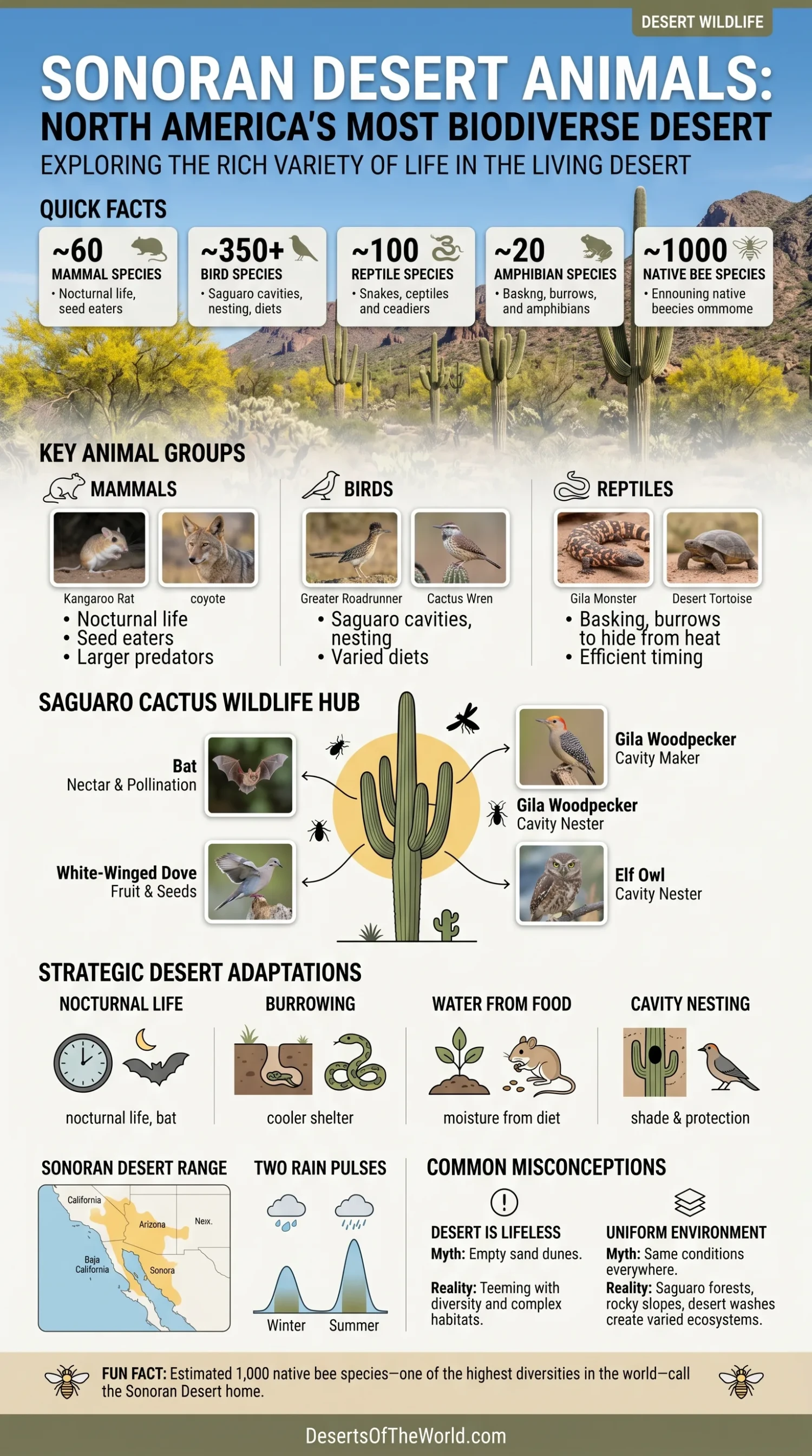
In North America, the Mojave is often linked with heat because it includes Death Valley, where Furnace Creek recorded 134°F (57°C) on July 10, 1913. That does not mean every part of the Mojave feels the same. The desert stretches across parts of California, Nevada, Arizona, and Utah, with low basins, rocky slopes, dry washes, dunes, springs, Joshua tree woodland, and high desert flats. Animals live by choosing the right part of that landscape at the right hour.
| Wildlife Group | Common Mojave Examples | Where They Are Often Linked | Main Survival Pattern |
|---|---|---|---|
| Mammals | Coyote, kit fox, kangaroo rat, black-tailed jackrabbit, desert bighorn sheep, bats | Open flats, rocky slopes, washes, caves, cliffs, spring areas | Night activity, efficient water use, shade seeking |
| Reptiles | Desert tortoise, chuckwalla, side-blotched lizard, zebra-tailed lizard, sidewinder | Burrows, rocky outcrops, sandy flats, shrubland | Burrowing, basking, seasonal movement, low water loss |
| Birds | Greater roadrunner, common raven, Gambel’s quail, burrowing owl, red-tailed hawk | Joshua tree woodland, washes, cliffs, open desert, oasis edges | Flight to water, seasonal movement, heat avoidance |
| Fish | Salt Creek pupfish, Devils Hole pupfish | Isolated springs, creeks, and water-filled caverns around Death Valley | Extreme tolerance and tiny, isolated habitats |
| Invertebrates | Scorpions, beetles, ants, spiders, native bees, butterflies | Soil, flowers, under stones, shrubs, washes | Small body size, burrowing, waxy coverings, night activity |
Why the Mojave Desert Has So Many Animals
The Mojave is dry, but it is not one flat sheet of sand. That is the first thing to understand. A dry wash may look empty in the afternoon, then become a travel lane for foxes, coyotes, jackrabbits, and insects after dark. A rocky canyon may hold shade longer than the open valley. A spring can support birds, mammals, insects, and fish in a space that seems tiny on a map.
Wildlife in the Mojave depends on microhabitats. These are small living zones inside the wider desert:
- Creosote bush flats, where kangaroo rats, lizards, insects, and jackrabbits use open ground and scattered shrubs.
- Joshua tree woodland, where birds perch, nest, feed, and move between open spaces.
- Dry washes, where deeper soil and occasional water support denser plant growth.
- Rocky slopes, where chuckwallas, bighorn sheep, snakes, and small mammals find shelter.
- Dunes and sandy flats, where sidewinders and specialized insects handle loose ground.
- Springs and seeps, where life gathers because water is rare.
This patchwork matters. In a place where open ground can feel oven-hot, a few degrees of shade or a narrow strip of water can change everything.
The Desert Tortoise: The Mojave’s Best-Known Reptile
The Mojave desert tortoise is one of the desert’s most recognized animals. It moves slowly, but its survival strategy is clever. It spends much of its life in burrows, where temperatures stay steadier than the open ground. For a reptile that cannot warm or cool itself the way mammals do, a burrow is not just shelter. It is a life-support space.
Desert tortoises feed mostly on wildflowers, grasses, cactus pads, and other desert plants when food is available. After winter and spring rains, plant growth can rise for a short period, and tortoises use that window. During hotter or drier periods, they reduce activity and remain underground for long stretches.
Why Tortoise Burrows Matter to Other Animals
A tortoise burrow can help more than the tortoise. Small mammals, reptiles, insects, and other desert animals may use abandoned or shared burrows for shade and protection. In the Mojave, shelter is a resource. A tunnel in the soil can be as valuable as a pond in a greener landscape.
The Mojave population of desert tortoise is listed as threatened by the U.S. Fish and Wildlife Service. The species is closely tied to healthy desert shrubland, open travel routes, and low-disturbance habitat. Slow animals need room and time. That is especially true here.
Mammals of the Mojave Desert
Mammals in the Mojave face a hard problem: they produce body heat, but the desert already gives them plenty. Many solve this by working the cooler hours. Dusk, night, and early morning are the main windows for movement.
Coyote
The coyote is one of the Mojave’s most adaptable mammals. It can feed on rodents, rabbits, insects, fruit, carrion, and other available food. That flexible diet helps it live across dry valleys, washes, foothills, and areas near human settlement.
In the Mojave, a coyote is often heard before it is seen. It may cross a road at dawn, pause near a wash, then disappear into pale desert brush. Efficient and alert, it wastes little effort.
Desert Kit Fox
The desert kit fox is smaller and more delicate-looking than the coyote, with large ears that help release body heat. It is mainly nocturnal. By day, it rests in dens; by night, it searches for rodents, insects, reptiles, and other small prey.
Its denning habit fits the Mojave well. The surface may be harsh, but below ground the desert changes character. Cooler. Quieter. More stable.
Kangaroo Rats
Kangaroo rats are desert specialists. They can live with very little direct drinking water because they draw moisture from seeds and manage water loss with great efficiency. Their long hind legs help them hop quickly across open ground, and their burrows give them daytime refuge.
They also play a role in seed movement. By caching seeds in the soil, they shape plant patterns in small but real ways. Tiny animal, wide influence.
Black-Tailed Jackrabbit
The black-tailed jackrabbit is built for open desert: long legs, long ears, quick bursts of speed. Its ears help shed heat, while its feeding habits link it to shrubs, grasses, and seasonal plant growth.
Despite the name, it is a hare, not a true rabbit. In the Mojave, it often rests in a shallow depression during hot hours, then feeds when temperatures ease.
Desert Bighorn Sheep
Desert bighorn sheep live in rugged mountain terrain, where steep slopes offer escape routes and shade breaks. They are tied to cliffs, rocky ridges, and water sources. During hot periods, access to springs and other water points becomes more important.
Bighorn sheep show how the Mojave is not only a low desert. It is also a desert of ranges and basins. The animals use elevation like a tool, moving through slopes and canyons that many other mammals avoid.
Bats
Bats are easy to overlook, but they are part of Mojave wildlife. Some roost in caves, mines, rock cracks, bridges, or tree spaces, then feed at night on flying insects. Around water sources, bat activity may rise because insects gather there too.
In a desert with few permanent water spots, a spring at dusk can become busy without looking crowded. Birds, insects, bats, and mammals may all pass through at different times.
Birds of the Mojave Desert
Birds handle the Mojave differently from ground animals. They can fly to water, shift with seasons, and use height for scouting. Still, heat and dry air shape their lives. Some stay year-round; many pass through during migration, especially in spring and fall.
Greater Roadrunner
The greater roadrunner fits the Mojave image well: fast on the ground, alert, and comfortable in open country. It eats insects, lizards, small snakes, spiders, rodents, and other small animals. It can fly, but it often runs.
Roadrunners use shrubs, low trees, and open patches in a practical way. They hunt where cover and visibility meet.
Common Raven
The common raven is smart, mobile, and widely seen across the Mojave. Ravens feed on many food sources, from insects and fruit to carrion. Their ability to use cliffs, trees, road corridors, and human-altered spaces makes them one of the desert’s most noticeable birds.
Ravens also affect other wildlife. Around some tortoise habitats, managers pay close attention to raven numbers because young tortoises are small and vulnerable.
Gambel’s Quail
Gambel’s quail are often linked with washes, shrubs, and desert edges where cover is available. They move in groups and feed on seeds, leaves, and small invertebrates. Their calls can make a quiet desert morning feel suddenly awake.
Burrowing Owl
The burrowing owl uses open ground and existing burrows, often made by mammals or tortoises. Unlike many owls, it may be active in daylight. It feeds on insects, small mammals, and other small animals.
Its presence points to the value of burrow systems. In the Mojave, holes in the ground are not empty spaces. They are rooms in the desert’s hidden architecture.
Raptors
Red-tailed hawks, golden eagles, and other birds of prey use open desert and mountain edges to hunt. They may watch from poles, cliffs, Joshua trees, or high air currents. Their prey can include rodents, rabbits, reptiles, and birds.
Open desert gives raptors visibility. It also gives prey fewer places to hide, so shrubs, rocks, and burrows matter.
Reptiles Built for Heat, Stone, and Sand
Reptiles are a natural fit for the Mojave, but they still avoid the worst heat. Many bask in the morning, shelter at midday, and move again later. Some are active mostly at night in the hottest season.
Chuckwalla
The chuckwalla is a large desert lizard often found among rocks. When threatened, it can wedge itself into a crevice and inflate its body, making it hard to remove. Its diet is mostly plant-based, including leaves, flowers, and fruit from desert plants.
Rocky terrain suits it well. Heat for basking, cracks for hiding, plants nearby when conditions allow.
Zebra-Tailed Lizard
The zebra-tailed lizard is quick and often seen on open sandy or gravelly ground. It may curl its tail over its back while running, flashing black-and-white bands. That tail display can confuse predators or signal alertness.
Side-Blotched Lizard
Small, active, and common in many desert habitats, the side-blotched lizard is one of the reptiles visitors are most likely to notice. It feeds on insects and other small invertebrates, moving between rocks, shrubs, and sun patches.
Sidewinder
The sidewinder is a rattlesnake adapted to loose sand. Its sideways movement reduces contact with hot ground and helps it travel over soft surfaces. It often rests partly buried, blending into pale sand.
Like other snakes, it should be respected from a distance. It is part of the desert food web, feeding on small rodents and lizards while also facing predators of its own.
Gopher Snake and Other Nonvenomous Snakes
Not every snake in the Mojave is venomous. Gopher snakes help control rodent populations and may be mistaken for rattlesnakes because they can flatten the head, hiss, and vibrate the tail when alarmed. That defensive act is often enough to keep trouble away.
Rare Fish in a Desert Landscape
Fish in the Mojave can surprise readers because the desert is known for dry basins and extreme heat. Yet Death Valley and nearby desert spring systems hold some of North America’s most unusual fish stories.
Salt Creek Pupfish
Salt Creek in Death Valley supports pupfish that live in salty desert water. These small fish survive where many freshwater fish could not. Their habitat is narrow, exposed, and fragile, so boardwalk viewing areas help people see the creek without trampling its edges.
The presence of pupfish reminds us that desert wildlife is not only about coyotes and lizards. Sometimes it is a small fish flashing in shallow water under a wide, dry sky.
Devils Hole Pupfish
The Devils Hole pupfish lives naturally in one water-filled cavern system in the Amargosa Desert area of Death Valley National Park. Its habitat is so small and specialized that population counts receive close attention from biologists.
Recent official counts have shown how delicate that population can be. The species has reached higher counts in some years and sharp lows in others. This is a desert animal with almost no margin for habitat change.
Insects, Scorpions, Spiders, and Other Small Desert Life
Small animals carry much of the Mojave’s living activity. Ants move seeds. Beetles break down plant material. Native bees visit desert flowers. Scorpions hunt at night. Spiders use soil, silk, stones, and shrubs in quiet ways.
After seasonal rains, wildflowers may bloom, and insect activity can rise around them. That short plant pulse feeds pollinators, which then feed birds, reptiles, and small mammals. The chain is brief, but it matters.
Scorpions
Scorpions avoid daytime heat by hiding under rocks, bark, or soil cover. At night, they hunt insects and other small prey. Their bodies are well suited to dry places, with low water loss and patient hunting behavior.
Native Bees and Desert Pollinators
Desert flowers may appear only when weather allows. Native bees, flies, butterflies, moths, and beetles use those blooms. Some pollinators are active for short seasonal windows, matching the rhythm of plants that grow, flower, and set seed quickly.
That timing is one reason Mojave wildlife cannot be understood from summer alone. Spring can show a different desert.
How Mojave Animals Survive Extreme Heat
The Mojave’s hottest places force animals to manage heat with care. Survival is rarely about strength alone. More often, it is about avoiding the wrong hour.
Night Activity
Many Mojave mammals and invertebrates are nocturnal. They rest during the day and move after sunset. Kangaroo rats, kit foxes, bats, scorpions, and many insects follow this pattern.
Burrows and Rock Crevices
Burrows buffer heat and cold. Rock cracks offer shade and predator protection. Tortoises, rodents, snakes, lizards, owls, foxes, and insects all depend on shelter spaces in different ways.
Water From Food
Some animals do not need to drink often because they gain moisture from seeds, plants, prey, or metabolic processes. Kangaroo rats are the classic example. Reptiles also limit water loss through scaly skin and low activity during harsh periods.
Seasonal Timing
Desert life often follows rain. Plants sprout. Insects appear. Tortoises feed. Birds nest or migrate. Predators respond to prey movement. Then the desert tightens again as heat and dryness return.
Important Mojave Habitats for Wildlife
| Habitat | Why It Matters | Animals Often Linked With It |
|---|---|---|
| Creosote Bush Scrub | Provides shade, seeds, insects, and cover across wide desert flats. | Kangaroo rats, jackrabbits, coyotes, lizards, snakes, insects |
| Joshua Tree Woodland | Adds vertical structure for nesting, perching, shade, and feeding. | Ravens, hawks, woodpeckers, quail, small mammals, lizards |
| Dry Washes | Hold deeper soils and denser plant growth after runoff. | Foxes, coyotes, quail, rabbits, insects, reptiles |
| Rocky Slopes | Offer shade, escape terrain, dens, and basking surfaces. | Bighorn sheep, chuckwallas, snakes, bats, raptors |
| Springs and Creeks | Support rare water-based life and attract many visiting animals. | Pupfish, birds, bats, insects, mammals |
| Dunes and Sandy Flats | Create loose-ground habitat for animals adapted to sand movement. | Sidewinders, beetles, lizards, rodents |
Animals Visitors Are Most Likely to Notice
Many Mojave animals hide well, but some are easier to see from roads, trails, camp areas, and overlooks. The likely sightings depend on season, elevation, and time of day.
- Early morning: jackrabbits, quail, roadrunners, lizards warming on rocks, coyotes crossing open ground.
- Midday in cooler seasons: lizards, ravens, hawks, ground squirrels, insects around flowers.
- Late afternoon: birds returning to active feeding, reptiles moving before temperatures drop.
- After sunset: kit foxes, kangaroo rats, bats, scorpions, owls, and other night-active animals.
Summer midday is the quietest time in many places. Not empty. Just hidden.
Death Valley and the Heat Edge of Mojave Wildlife
Death Valley gives the Mojave its heat reputation. Its below-sea-level basin, clear skies, dry air, and surrounding mountains help trap and intensify heat. For animals, this creates a strict daily schedule.
Reptiles may use morning warmth, then vanish into shade. Mammals may remain in dens until night. Birds may follow water, food, and cooler air. Fish survive only where water persists. Each animal has a narrow set of choices, and good choices matter.
The name Death Valley can make the place sound lifeless, but the opposite lesson is more accurate: life exists there because it is selective, efficient, and closely tied to small habitat differences.
Why Water Sources Are Wildlife Centers
Water in the Mojave is rare enough that springs, seeps, and creeks become wildlife centers. Some animals drink directly. Others hunt the insects that gather there. Birds use wet areas during migration. Bats feed over water at dusk. Pupfish live in water bodies that may be small, salty, warm, or isolated.
A desert spring is not just a wet spot. It is a meeting point for many life cycles.
Predators, Prey, and the Mojave Food Web
The Mojave food web runs on seeds, leaves, flowers, insects, and small animals. Desert plants feed insects and rodents. Insects feed lizards, birds, spiders, and bats. Rodents feed snakes, owls, foxes, coyotes, and raptors. Carrion feeds ravens, coyotes, beetles, and other scavengers.
Nothing is wasted for long.
Seed Eaters
Kangaroo rats, ground squirrels, quail, ants, and other small animals use seeds from grasses, shrubs, and seasonal plants. Seed storage can affect where plants grow later.
Insect Hunters
Lizards, roadrunners, bats, spiders, scorpions, and birds all depend on insects. After bloom periods, insect numbers may rise, creating a short feeding season for many species.
Larger Predators
Coyotes, bobcats, foxes, raptors, and snakes help balance prey populations. Their movements often follow prey activity, water access, and shade.
Seasonal Wildlife Patterns in the Mojave
Spring
Spring is often the most active wildlife season. Temperatures are milder, plants may grow after winter rain, insects become more visible, birds migrate, and reptiles leave shelters more often. Desert tortoises may feed on fresh plants when conditions are right.
Summer
Summer pushes many animals into night routines. Daytime activity drops in exposed areas. Springs and shaded canyon zones become more valuable. In Death Valley and other low basins, heat can limit visible wildlife for much of the day.
Fall
Fall can bring renewed movement as temperatures ease. Migrating birds may pass through desert oases and washes. Reptiles may remain active during warm periods, though less than in spring.
Winter
Winter is quieter for many reptiles and some mammals, especially at higher elevations. Birds, coyotes, jackrabbits, and other hardy animals may still be seen. Cold desert nights are part of the Mojave too.
Adaptations That Define Mojave Desert Animals
| Adaptation | How It Helps | Examples |
|---|---|---|
| Burrowing | Reduces heat stress and protects animals from dry wind and predators. | Desert tortoise, kangaroo rat, kit fox, burrowing owl |
| Nocturnal Activity | Lets animals feed and travel during cooler hours. | Kit fox, kangaroo rat, bats, scorpions |
| Large Ears | Helps release body heat in some mammals. | Kit fox, black-tailed jackrabbit |
| Efficient Water Use | Limits the need for frequent drinking. | Kangaroo rats, reptiles, many desert insects |
| Seasonal Dormancy or Low Activity | Saves energy during very hot, dry, or cold periods. | Desert tortoise, many reptiles, some invertebrates |
| Heat-Aware Movement | Reduces contact with hot ground or avoids exposed surfaces. | Sidewinder, lizards, small mammals |
Mojave Wildlife and Plant Connections
Animals and plants are tightly linked in the Mojave. Creosote bush, Joshua tree, yucca, saltbush, cactus, mesquite, and seasonal wildflowers all support animal life in different ways.
- Joshua trees provide perches, nesting spaces, shade, and food links for insects and birds.
- Creosote bush creates shade islands and supports insects, small mammals, and reptiles.
- Cacti and yuccas offer flowers, fruit, cover, and insect activity.
- Spring wildflowers feed pollinators and seed-eating animals during short windows.
- Mesquite and wash vegetation create richer habitat where water moves through the desert soil.
When plants respond to rain, animals respond to plants. That pulse can be brief, but the desert remembers it through seeds, burrows, stored food, and new growth.
Common Misunderstandings About Mojave Desert Animals
The Desert Is Not Empty
Many animals are hidden, nocturnal, seasonal, or small. A quiet afternoon does not mean low biodiversity. It often means the animals are waiting underground, under rocks, in shade, or in cooler nearby habitats.
Most Animals Avoid People
Desert wildlife usually chooses distance. Coyotes, foxes, snakes, tortoises, bighorn sheep, and birds all do better when observed calmly and left alone.
Water Does Not Mean Safety for Every Animal
Water sources attract life, but they can also be delicate. Pupfish habitats, spring edges, and wetland pockets can be damaged by footsteps, pets, and off-trail movement. In a dry desert, a small wet place carries a lot of weight.
Heat Is Not the Only Challenge
Cold nights, scarce food, dry wind, predators, flash floods, habitat gaps, and seasonal timing all shape Mojave wildlife. Heat gets attention, but it is only one part of the story.
Respecting Wildlife in the Mojave Desert
Good wildlife viewing in the Mojave is simple: give animals space, stay on established routes, keep water sources clean, and avoid feeding wildlife. Feeding may seem kind, but it changes natural behavior and can harm animals over time.
- Watch from a distance, especially with tortoises, snakes, bighorn sheep, and nesting birds.
- Do not touch, move, or pick up desert tortoises unless a direct road emergency requires official guidance.
- Stay on boardwalks and marked paths around fragile springs, creeks, and pupfish habitat.
- Keep food secured so ravens, coyotes, rodents, and insects do not become dependent on visitor areas.
- Drive slowly in desert parks and preserves, especially near dawn and dusk.
The Mojave rewards patient observation. A track in sand, a lizard on a warm rock, a raven shadow crossing a wash, a small fish in desert water — these are not side details. They are the desert’s living map.
Notable Mojave Desert Animals and Where They Fit
| Animal | Animal Type | Main Role in the Desert | Typical Habitat Link |
|---|---|---|---|
| Mojave Desert Tortoise | Reptile | Plant eater, burrow maker, long-lived desert resident | Creosote flats, washes, desert scrub |
| Coyote | Mammal | Flexible predator and scavenger | Washes, flats, foothills, park edges |
| Desert Kit Fox | Mammal | Small nocturnal hunter | Open desert, denning areas, sandy soils |
| Kangaroo Rat | Mammal | Seed eater and prey for many predators | Burrows in sandy or gravelly soils |
| Desert Bighorn Sheep | Mammal | Large herbivore of rugged terrain | Rocky ranges, cliffs, spring areas |
| Greater Roadrunner | Bird | Ground hunter of insects, reptiles, and small animals | Open scrub, washes, desert edges |
| Burrowing Owl | Bird | Small predator using burrow habitat | Open flats and existing burrows |
| Chuckwalla | Reptile | Plant-eating rock lizard | Boulder fields and rocky slopes |
| Sidewinder | Reptile | Sand-adapted snake and rodent hunter | Dunes and sandy flats |
| Salt Creek Pupfish | Fish | Rare water-dependent desert fish | Salt Creek in Death Valley |
Sources
- National Park Service: Animals of Mojave National Preserve (species group counts and Mojave wildlife overview)
- National Park Service: Death Valley Weather and Climate (Furnace Creek heat record, summer heat, low rainfall)
- National Park Service: Animals of Death Valley National Park (heat adaptation and desert animal behavior)
- National Park Service: Animal Adaptations at Joshua Tree National Park (water use, reptile and bird adaptations in Mojave-linked habitat)
- U.S. Fish and Wildlife Service: Desert Tortoise (Mojave desert tortoise status, range, and conservation context)
- National Park Service: Fish of Death Valley National Park (pupfish species and isolated desert water habitats)
- National Park Service: Salt Creek (Salt Creek pupfish habitat and boardwalk viewing area)
- U.S. Geological Survey: Joshua Tree National Park Ecology (Mojave and Colorado Desert boundary, animal and plant diversity)