
Location and Setting
Continent: Asia (Arabian Peninsula)
Country: Oman
Region: Ash Sharqiyah (Eastern Oman) between the interior plains and the Arabian Sea-facing side of the country
Also Known as: Wahiba Sands (historic name), Ramlat Āl Wahībah
Coordinates (central reference): 22°00′N, 58°50′E
Nearby Gateways: Bidiyah, Al Wasil, Ibra (common service towns on the desert’s edge)
Sharqiya Sands – Map Views
Photos of Sharqiya Sands
Gallery:
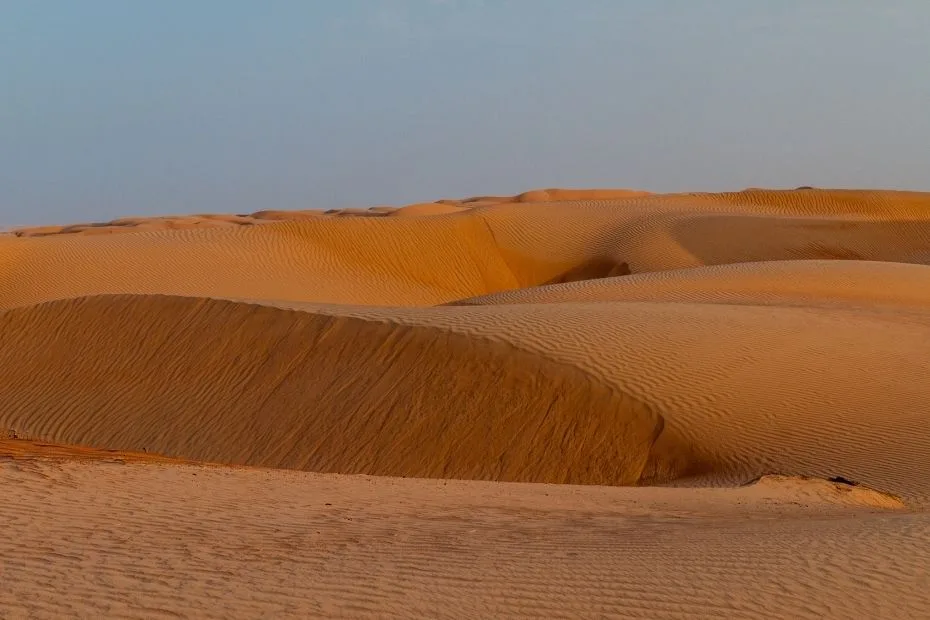
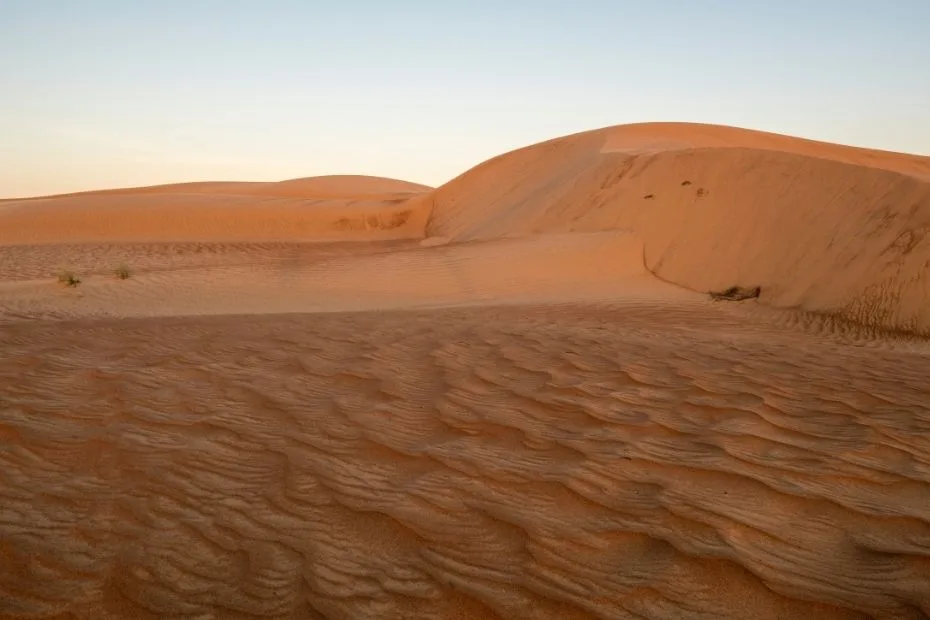
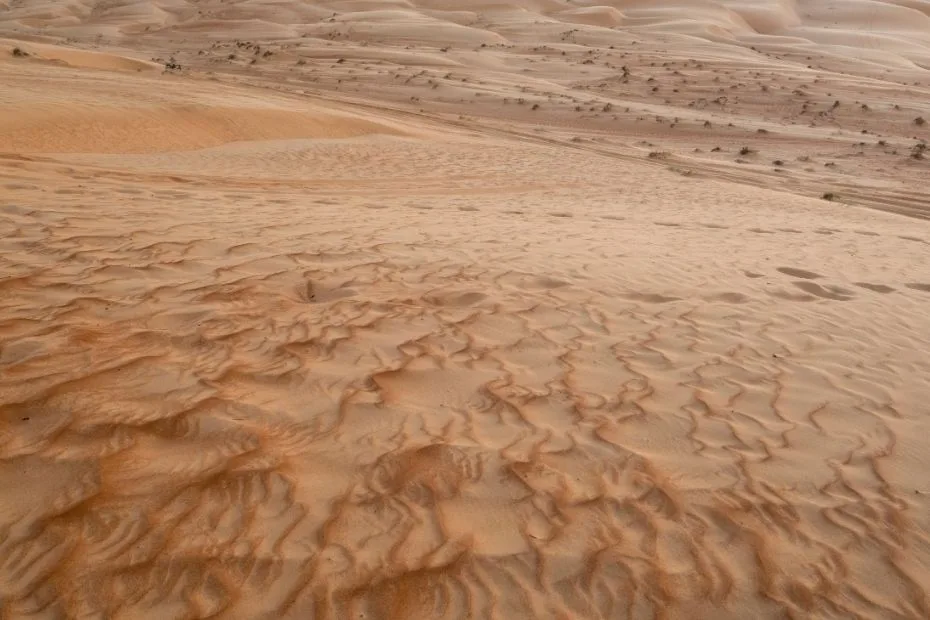
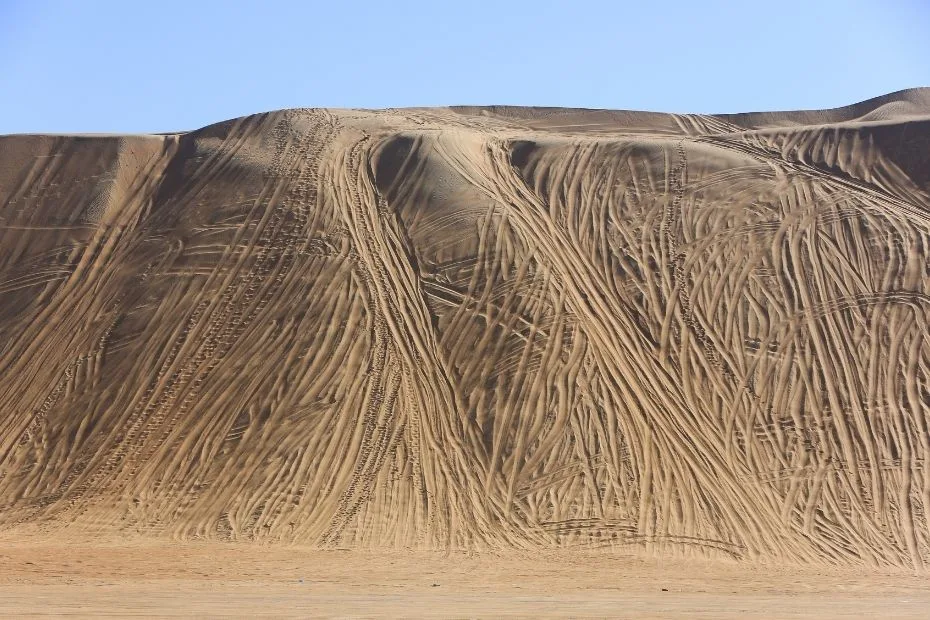
Physical Profile
| Feature | Details |
|---|---|
| Type | A compact sand sea (erg-like dune field) with striking ridge systems and open interdune corridors that feel like sandy “valleys”. |
| Area | About 12,500 km² (large enough to swallow a small country’s worth of horizons). |
| Extent | Roughly 180 km north–south and 80 km east–west, forming a long, dune-rich ribbon across eastern Oman rather than a round “blob” of sand. |
| Dune Height | Many dunes rise 50–100 m; some ridge crests can climb higher, with impressive faces that read as well over 100 m in places. |
| Natural Borders | Wadi Batha and Wadi Andam shape parts of the margin, acting like broad, dry “routes” where sediments and wind stories meet (wadi + dune is a classic desert duet). |
Sharqiya Sands is often described as a desert that “fits in the hand” compared with continental giants, yet it delivers big desert variety.
In a single field, the land flips between knife-edge ridges, smooth dune ramps, and firm interdune floors that appear like natural corridors.
The colors can shift from pale gold to deeper reds, as if the sand is changing clothes with the light.
Climate and Seasonal Rhythm
The desert climate here is arid and sunlit, shaped by large sky, dry air, and a strong daily temperature swing.
Days can feel sharp and hot, while nights often turn pleasantly cool, especially outside mid-summer.
Rain is usually scarce, arriving in brief moments that vanish quickly into sand like water poured onto warm stone.
| Season | Typical Daytime Feel | Typical Night Feel | Rain Pattern |
|---|---|---|---|
| Winter (Dec–Feb) | Mild to warm, often pleasant for long hours outdoors. | Cool; the air can feel crisp under clear skies. | Low; occasional showers. |
| Spring (Mar–May) | Warming fast; bright, drying winds become more noticeable. | Comfortable to cool, with bigger temperature swings. | Still low; some of the higher monthly totals can occur around early spring. |
| Summer (Jun–Aug) | Hot; midday heat can feel heavy on open dunes. | Warmer nights, though breezes can soften the edges. | Very low; many days pass with no measurable rain. |
| Autumn (Sep–Nov) | Heat eases; the desert begins to feel “open” again. | Cooler evenings return, especially late in the season. | Generally minimal; occasional short-lived showers. |
Average annual rainfall is often described in the low tens of millimeters, and some months can be nearly dry.
That scarcity is why micro-events matter: a brief shower can trigger a small burst of plant growth and insect activity, then the desert quietly folds it away again like a page turning.
Ecology: A Living Sand Sea
Sharqiya Sands sits within the broader Arabian desert environment, but its personality comes from variety.
Dunes, interdune flats, and sandy edges create a patchwork of habitats, so life appears in pockets rather than evenly spread.
Think of it as an archipelago of niches, where each “island” favors a different set of survivors.
The desert floor is not just sand.
In places, firmer surfaces and older cemented layers lie beneath the loose grains, influencing where moisture lingers and where roots can anchor.
This hidden structure is part of why the area drew strong scientific attention: it behaves like a compact outdoor laboratory, with many dune forms packed into one region without needing to travel far.
Flora and Fauna
Life here leans on smart design.
Plants tend to be drought-tolerant, often small, sometimes thorny, and usually efficient with leaves and water.
After rare rain, the sand can briefly host fresh green flashes—short-lived grasses and tiny flowers that appear, bloom, and fade with impressive speed.
Common Plant Types You May Encounter
- Ghaf (Prosopis cineraria) in suitable spots, valued for shade and resilience (a desert “umbrella” tree).
- Acacia species along margins and in places influenced by wadis, with deep-root strategies that favor survival.
- Salt-tolerant shrubs and hardy bushes in interdune areas where soils can be slightly different from pure dune sand.
- Ephemeral plants that wait as seeds until conditions turn briefly favorable, then sprint through a full life cycle.
Animal life is often most visible at cooler hours, yet the diversity can be surprisingly rich.
Scientific surveys have highlighted an enormous invertebrate community, alongside birds, reptiles, and mammals.
The rule is simple: stay small, stay efficient, and keep moving when the air is kind (the desert rewards timing).
Wildlife Patterns That Fit the Sharqiya Sands Environment
- Invertebrates dominate the numbers, from beetles to other sand-adapted species that leave delicate tracks at dawn.
- Birds appear around the edges and corridors, including desert-adapted songbirds and seed-eaters that read the landscape like a map.
- Reptiles are well-suited to hot surfaces, with movement styles that minimize contact with warm sand.
- Small mammals may be present in sheltered zones, relying on burrows and nocturnal routines for comfort.
Tracks are often the best “field guide.”
A clean dune face can record a whole night’s activity—tiny lines, dots, sudden turns—then a morning breeze erases it all.
It’s desert storytelling, written in sand and edited by wind every single day.
Geology and Dune Architecture
Sharqiya Sands is not a random pile of sand.
It formed and evolved through Quaternary climate rhythms and powerful wind systems.
Two seasonal wind influences are often highlighted in explanations of its dune shapes: southwest monsoon-related winds and the northern shamal.
Where these forces meet, dunes can align in long north–south ridges, giving parts of the desert a striped, combed look from above.
Dune forms also vary enough that the sands are often discussed in two broad zones: a higher, northern sector with prominent ridges, and a lower, southern sector with different dune types and sand sheets.
The contrast is useful because it shows how the same desert can behave like two related landscapes—siblings, not twins sharing the same sky.
What Makes the Sand Special?
- Mixed grain character: mineral and carbonate components can appear together, reflecting more than one source pathway.
- Buried layers: beneath the loose surface, older cemented sands may occur, adding stability in some places.
- Wadi influence: sediments from major drainage systems help shape margins and can feed or redirect sand movement.
One striking scientific note is the discovery of older deposits deep below the interdune surface in parts of the desert.
That kind of vertical story—layers separated by time—turns the sands into a natural archive, a place where today’s dune crest sits above yesterday’s buried landscape like pages stacked.
Introduction to Sharqiya Sands
Sharqiya Sands is one of Oman’s most recognizable dune regions, a golden interior that has earned attention from scientists, photographers, and nature-focused travelers alike.
It is also widely known by its earlier name, Wahiba Sands, linked to the Bani Wahiba tribal heritage of the region.
The landscape is classic sand sea—dunes rolling into the distance—yet it feels intimate, because the edges and gateways are relatively close and clearly defined.
The first impression is often the shape language of the dunes.
Some ridges run long and clean, like waves frozen mid-ocean.
Others gather into smoother mounds, and between them lie flat corridors where the sand is firm enough to show crisp footprints.
Under a low sun, shadows carve the dunes into sharp relief, turning a simple slope into a blueprint of wind.
Sharqiya Sands has also been a well-known site for field research, including major survey work that documented extensive biodiversity.
That detail matters because it pushes back against a common myth: dunes are not empty.
Here, the “emptiness” is more like a quiet stage where small, well-adapted life performs in subtle ways—often unnoticed until you look closer and slow down.
Human Presence and Desert Heritage
The sands are not isolated from people; they are connected to surrounding communities and long-running desert knowledge.
The historic name Wahiba reflects the presence of local tribal groups, and the desert’s edges include oases and seasonal resource areas where dates and grazing have traditionally been important.
In this setting, water becomes more than a resource—it becomes a rhythm-setter, shaping when and where life gathers.
Today, Sharqiya Sands is also part of Oman’s broader natural tourism identity, with desert camps and organized activities common along accessible margins.
Even then, the core experience remains the same: open dunes, clean air, and a horizon that feels uncluttered.
It’s a landscape that encourages respect, partly because it looks simple, and partly because it is not simple at all once you learn to read it.
The most lasting cultural detail is how well local knowledge matches the environment.
Routes follow firmer corridors.
Shade matters.
Timing matters.
Desert wisdom here is rarely dramatic; it is practical, calm, and built from observation—the kind of intelligence that comes from paying attention even on ordinary days. One could say the sands teach patiance, gently and repeatedly.
Sharqiya Sands in the Wider Desert World
Within a global desert atlas, Sharqiya Sands belongs to the family of coastal-influenced sand seas—dune systems that can receive materials from inland drainage, older sediments, and coastal sources.
That mix can help explain why dune color and texture sometimes vary from place to place.
It also explains why the dunes can look so “organized” from above: long ridges aligned by dominant winds, like comb marks across a sandy canvas drawn by the atmosphere.
Compared to megadeserts, the footprint is smaller, which is exactly the point.
A compact sand sea makes it easier to observe transitions—ridge to corridor, corridor to edge, edge to wadi—without losing the sense of immersion.
For anyone studying dunes, this is a gift: a complete system in a single region, with enough variety to keep questions alive for years.
Sources
Experience Oman – A’Sharqiyah Sands (Official Destination Page)
Visit Oman – A’Sharqiyah Sands (Official Destination Listing)
NASA (Johnson Space Center) – Wahiba Sands Image Information
Sultan Qaboos University – Research Record on Wahiba Sand Sea Formation
University of Northern Iowa (ScholarWorks) – Dune Sand Pathways Study (Wahiba Sand Sea)
Royal Geographical Society – Wahiba Sands Project Summary (PDF)