
Location & Continent
Continent: Mostly Europe & Asia (Eurasian Arctic), with related polar desert zones in North America & Greenland
Core Arctic Desert Ecoregion:
Svalbard (Norway), Franz Josef Land, Severny Island (Novaya Zemlya) and Severnaya Zemlya (Russia) – all lying above about 75°N in the Arctic Ocean
Broader Polar Desert Belt:
Includes extremely dry High Arctic areas of northern Greenland and the Canadian Arctic Archipelago (for example Ellesmere and Devon Islands).
Approximate Coordinates:
75–82°N, 20–100°E (Eurasian Arctic desert core) and 70–85°N, 40–90°W (Greenland–Canadian polar deserts)
Arctic Desert – Map & Street View
Photos of the Arctic Desert
Physical Features
Area (core Arctic desert ecoregion): Around 161,400 km² of islands in the Arctic Ocean, mostly ice, snow and bare rock
Wider polar desert belt: Up to several million km² of very dry High Arctic landscapes spread across Eurasia, Greenland and North America
Elevation: Mostly low coastal plains and rolling plateaus; local mountains and ice caps rise above 1,500 m in places
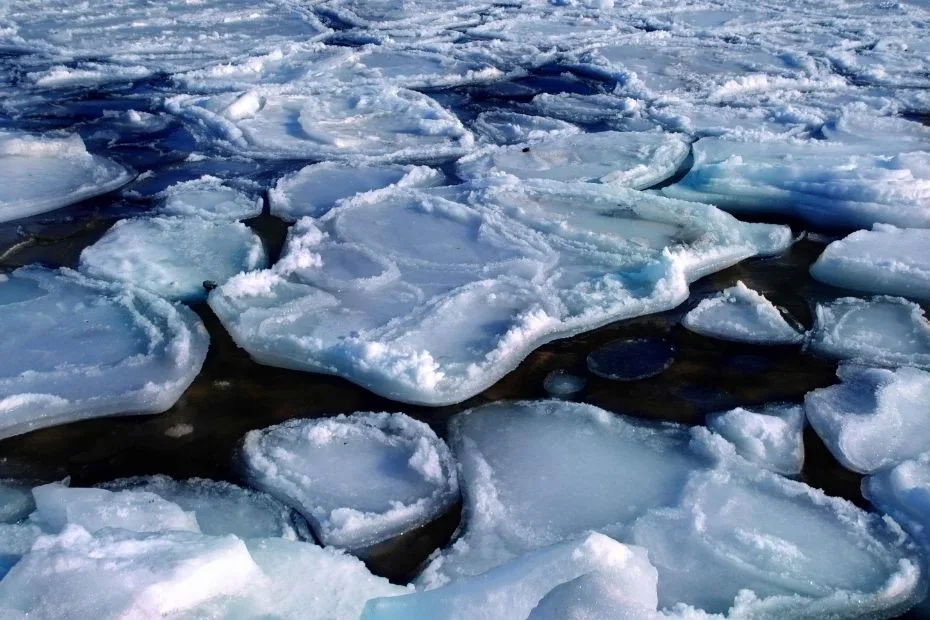
Surface: Glaciers, permanent ice caps, frozen seas, patterned ground, frost-shattered rock fields and thin gravelly soils over permafrost
Water bodies: Sea ice–covered fjords, seasonal meltwater streams, small ponds and coastal polynyas (open water leads in sea ice)
Climate & Precipitation
Climate type: Polar desert / High Arctic tundra – long, dark winters and very short, cold summers
Mean winter temperatures: Often below -25 °C; at one Arctic desert station in Franz Josef Land, January averages around -25.6 °C
Summer temperatures: Usually just above freezing; warmest month stays under 10 °C, which is a key criterion for polar desert climates
Precipitation: Generally less than 250 mm per year, often under 100 mm in the driest Canadian and Greenlandic polar deserts – similar to some hot deserts, only here it falls mainly as snow
Wind: Persistent winds, katabatic flows off ice caps and occasional dry föhn winds that can raise temperatures quickly along coasts
Ecological Features
Ecozones & Biomes:
– Palearctic Arctic desert ecoregion (WWF ID: PA1101) – tundra biome in the Eurasian Arctic
– Canadian and Greenland High Arctic tundra – also functioning as polar deserts in their driest sectors
Permafrost: Ground is frozen to great depth year-round; only a thin active layer thaws for a few weeks each summer.
Vegetation cover: From completely bare ice and rock to sparse carpets of mosses and lichens (often just 5–10% cover in the true desert zones)
Flora & Fauna
Typical Flora:
– Crustose and foliose lichens and cold-hardy mosses dominating exposed rock and soil
– Tiny cushion plants, saxifrages, Arctic poppies and rushes in the slightly warmer, sheltered spots
– In coastal foothills and lowlands: patchy herbaceous cover of sedges, grasses and dwarf willows where snow melts earlier
Key Terrestrial Fauna:
– Polar bear (top predator, heavily dependent on sea-ice for hunting seals)
– Muskox, caribou/reindeer, Arctic hare and lemmings in slightly more vegetated High Arctic tundra
– Arctic fox and High Arctic wolves following herbivore herds and seabird colonies
Marine & Coastal Wildlife:
– Ringed, bearded and harp seals using sea ice for resting and breeding
– Walrus feeding on clams along shallow continental shelves
– Narwhals, beluga whales and occasionally bowhead whales cruising ice-fringed waters
Birdlife:
Short, intense summers support large nesting colonies of seabirds – kittiwakes, guillemots, ivory gulls and little auks. Many migrate thousands of kilometres from temperate and tropical regions to exploit the brief pulse of productivity in the polar light.
Geology & Notable Features
Geological Foundation:
The Arctic desert rests on a mix of ancient crystalline shields, sedimentary basins and young glacial deposits. Repeated glaciations sculpted deep fjords, cirques and U-shaped valleys, leaving behind moraines, drumlins and patterned ground.
Typical Polar Desert Landforms:
- Ice caps & outlet glaciers flowing toward the sea
- Raised beaches marking former sea levels as ice sheets retreated
- Polygonal ground created by freeze–thaw cracking of permafrost
- Rocky plateaus and nunataks (mountain peaks protruding through ice)
Example Regions:
– Svalbard’s rugged mountains and tidewater glaciers
– Franz Josef Land’s heavily glaciated islands
– High Arctic plateaus of Ellesmere and northern Greenland, among the driest and coldest places on Earth
What Is the Arctic Desert?
The Arctic desert is not a single sandy basin but a set of polar desert landscapes spread across the High Arctic. These regions qualify as deserts because they receive very little precipitation – often less than many hot deserts – and yet the ground stays locked in ice for most of the year.
In plain terms, imagine a classic desert: dry air, clear skies, hard soils. Now replace warm sand with rock, snow and glacial ice. That contrast captures the essence of the Arctic desert – a place where dryness and cold join forces.
Key Facts
| Feature | Arctic Desert Value |
|---|---|
| Climate type | Polar desert / High Arctic tundra (cold, very dry) |
| Annual precipitation | Typically < 250 mm; often < 100 mm in the driest zones |
| Warmest month | Below 10 °C, usually just above freezing |
| Core ecoregion area | ≈ 161,400 km² (Svalbard & Russian Arctic islands) |
| Main countries | Norway, Russia, Canada, Greenland (Denmark) |
| Typical vegetation | Mosses, lichens, tiny herbs; many areas almost bare |
| Flagship animals | Polar bear, Arctic fox, muskox, walrus, ivory gull |
Arctic Desert vs. “Normal” Desert
Many visitors ask a simple question: How can a land full of snow be a desert at all?
In climatology, a desert is defined mainly by low precipitation, not by temperature or the presence of sand. The Arctic desert fits this definition perfectly:
- Precipitation is usually below 250 mm per year, similar to or lower than classic hot deserts.
- Moisture that does fall remains locked as snow and ice, hardly available to plants.
- Cold air holds little water vapour, so clouds and rain are scarce.
The result is a high-latitude mirror of dry subtropical deserts: the same climatic dryness, but expressed through ice rather than dunes.
Countries & Regions Shaped by the Arctic Desert
Norway – Svalbard
The Svalbard archipelago is one of the best-known examples of an Arctic desert landscape. Glaciers cover much of the terrain, and Longyearbyen – the main settlement – sits between icy mountains and fjords. Tourism, science and coal-mining history all interact with the fragile enviroment here.
Russia – High Arctic Archipelagos
Franz Josef Land, Severny Island and Severnaya Zemlya form an almost continuous chain of remote polar islands. Much of the land lies inside large protected areas, including Russian Arctic National Park, which shelters important breeding grounds for polar bears, walruses and seabirds.
Greenland – Kalaallit Nunaat High Arctic
Northern Greenland’s coasts and inland plateaus host a classic polar desert climate: brutally cold winters, summer temperatures rarely above 5 °C, and very low precipitation. Sheltered slopes and wind-scoured ridges support reindeer, muskox and sparse tundra vegetation.
Canada – High Arctic Islands
Islands such as Ellesmere, Devon and Axel Heiberg in Nunavut and the Northwest Territories form one of the driest cold regions on Earth. Here, large areas receive the equivalent of less than 100 mm of water a year, and some of the landscape resembles a stony, frozen moonscape.
Life in a Polar Desert: How Plants and Animals Survive
Surviving in the Arctic desert means solving three problems at once: cold, dark and dry. Species that live here use some remarkable strategies.
Plants: Small, Tough and Close to the Ground
- Low stature: Plants hug the ground to avoid icy winds and take advantage of the slightly warmer air just above the surface.
- Dark pigments: Some flowers and leaves have darker colours that absorb more solar energy during the short summer.
- Quick growth: When snow melts, many species grow, flower and set seed in only a few weeks.
- Perennial life cycles: Energy is stored in roots and underground parts to survive many winters in a row.
Animals: Timing and Energy Efficiency
- Seasonal movements: Caribou, some birds and even marine mammals track the shifting edge of sea ice and fresh vegetation each year.
- Insulation: Double fur layers, thick fat and compact body shapes reduce heat loss.
- Colour change: Species like the Arctic fox and hare switch to white winter coats for camouflage and to reflect sunlight differently.
- Nocturnal or crepuscular behaviour in summer: Many animals feed in the “evening” hours when glare and evaporation are slightly lower, even under midnight sun.
Indigenous Peoples & Human Presence
While the core Arctic desert islands are almost uninhabited, the wider polar desert belt lies within the homelands of diverse Indigenous peoples, including Inuit, Inupiat, Yupik, Sámi and others. Around the Arctic as a whole, roughly hundreds of thousands of Indigenous residents live in coastal communities, small towns and seasonal hunting camps.
Key points about human life in and around the Arctic desert:
- Traditional knowledge: Detailed understanding of sea ice, animal migrations and weather patterns is essential for safe travel and hunting.
- Subsistence activities: Fishing, sealing and caribou or reindeer herding remain culturally and nutritionally important.
- Modern towns: Settlements such as Longyearbyen (Svalbard) and small communities in northern Canada and Greenland combine research, tourism, local livelihoods and administration.
This human presence is tightly linked to the health of the desert’s ecosystems; when sea ice patterns change, communities must adapt routes, timing and sometimes entire lifestyles.
Climate Change & Threats to the Arctic Desert
The Arctic is warming several times faster than the global average. For the Arctic desert, this means:
- Loss of sea ice: Less sea ice reduces hunting platforms for polar bears and alters marine food webs.
- Changing snow and rain patterns: Warmer air can hold more moisture, so some polar desert areas may become slightly wetter, shifting them toward more vegetated tundra.
- Vegetation “greening”: Satellite data show gradual expansion of shrubs and grasses in many Arctic regions, changing albedo and local climate feedbacks.
- Permafrost thaw: Thawing ground affects buildings, roads and natural slopes, and releases greenhouse gases stored in frozen soils.
- Industrial pressure: Interest in shipping, mining and fossil fuel extraction increases as sea ice retreats, adding pollution and disturbance risks.
Conservation organisations and Arctic states are working to expand protected areas, regulate shipping corridors and support Indigenous-led stewardship, because decisions taken here influence both local cultures and global climate.
Visiting the Arctic Desert Safely
The Arctic desert can be an extraordinary but demanding destination:
- Access: Most visitors travel by guided expedition ship or organised tours to Svalbard, Greenland or the Canadian High Arctic.
- Season: Short summer (roughly June–August) offers the safest conditions, midnight sun and the highest chance to see wildlife on land.
- Risks: Extreme cold, rapidly changing weather, sea ice, polar bears and remoteness all require professional guidance and strict safety protocols.
- Low-impact travel: Staying on marked paths, avoiding wildlife disturbance and following local rules help keep this fragile landscape intact.
For many visitors, the strongest memory is the silence: a vast, bright desert of ice where even a single bird call or crack of a glacier carries for kilometres.
Frequently Asked Questions about the Arctic Desert
Is the Arctic desert the same as the Arctic tundra?
Not exactly. The Arctic tundra includes extensive areas with more regular vegetation and slightly higher precipitation. The Arctic desert refers to the driest and coldest parts of this region, where ice, rock and sparse lichens dominate.
Does it snow a lot in the Arctic desert?
Surprisingly, no. Many polar deserts receive less total precipitation than some warm deserts. Strong winds can blow snow around, making it look like it snows more than it actually does.
What is the main difference between the Arctic desert and Antarctic desert?
Both are polar deserts with extreme cold and low precipitation. The Antarctic desert is much larger and mostly continental; the Arctic desert is more of a ring of islands and coastal zones surrounding an ocean, with more marine influence and closer ties to human communities.
Why does the Arctic desert matter for the rest of the world?
Sea ice, snow cover and permafrost in the Arctic desert reflect sunlight and store greenhouse gases. Changes here affect global sea level, ocean circulation and climate patterns far beyond the polar regions.
References
World Wildlife Fund – The Arctic: ecosystems, people and threats
NASA Earth Observatory – Tundra Mission: Biomes
National Geographic – Tundra Biome Overview
Encyclopaedia Britannica – Arctic Climate and Polar Desert Conditions
European Environment Agency – Polar Desert Habitat Factsheet
Arctic Desert Ecoregion (PA1101) – background and distribution