
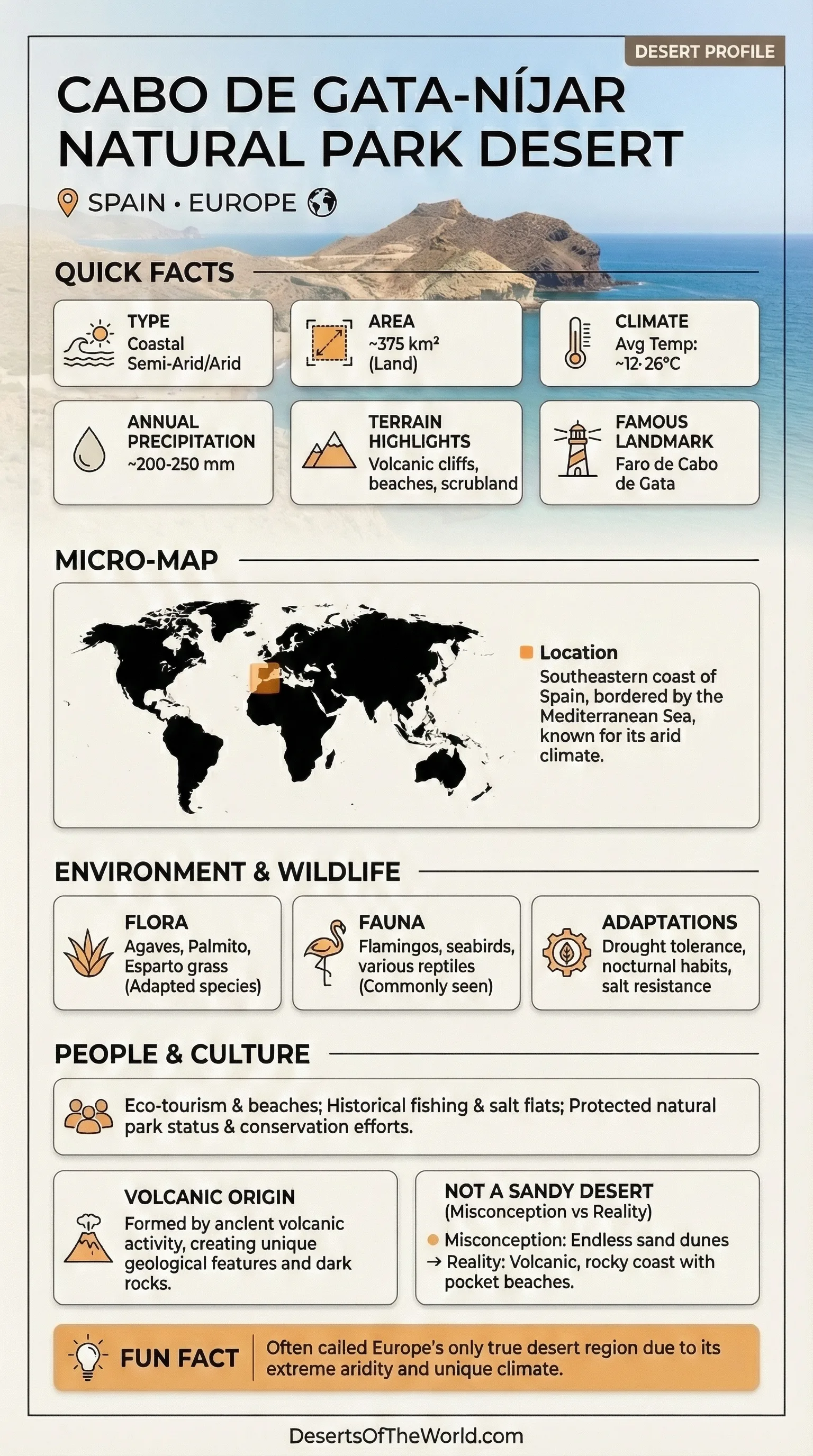
Location & Continent
Continent: Europe
Country: Spain
Region: Andalusia, Province of Almería
Coordinates: 36°50′N, 2°11′W
Click to load the interactive map
Photos of Cabo de Gata-Níjar Natural Park
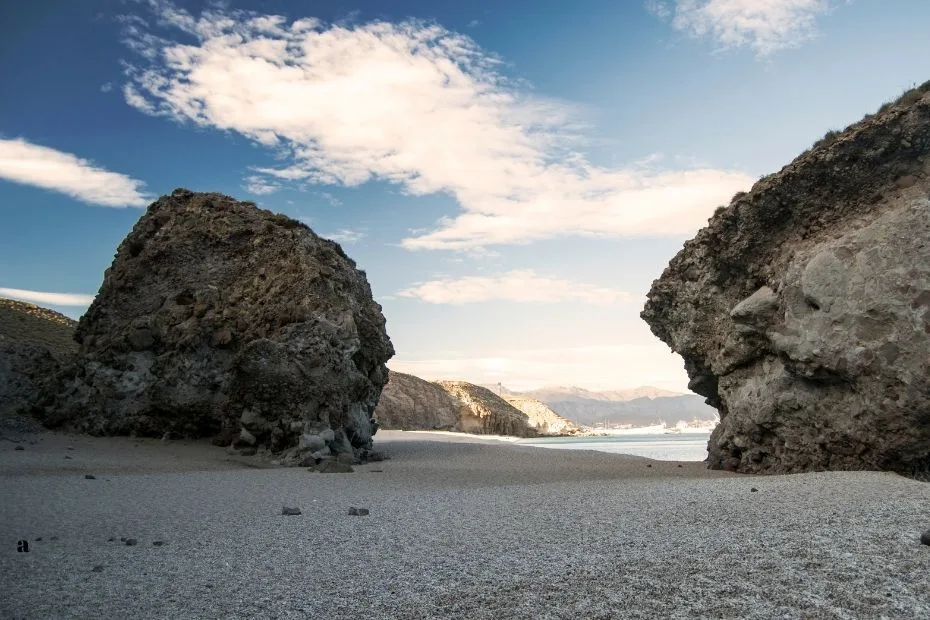
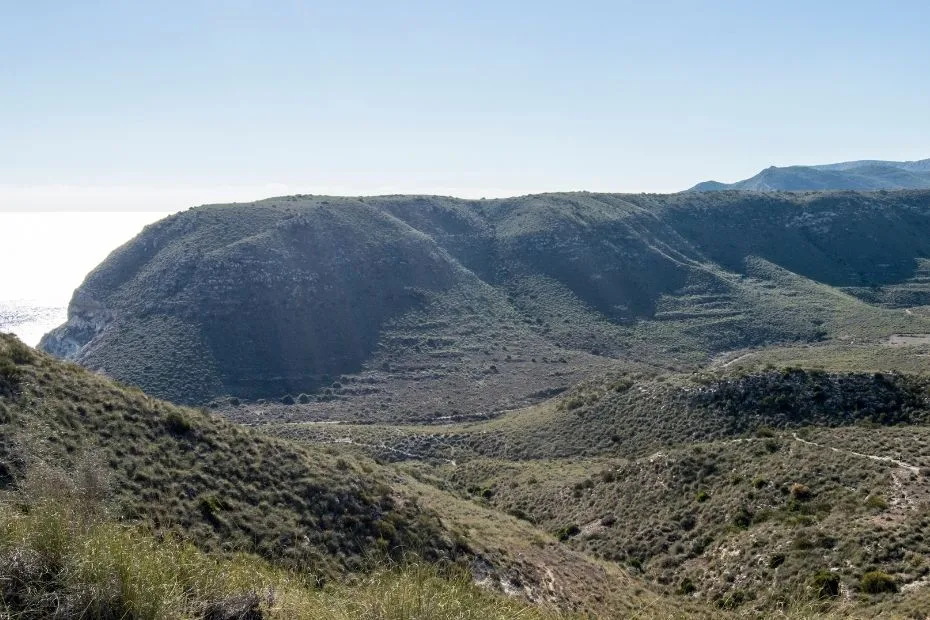
Physical Features
Area: 460 km² (terrestrial), 120 km² (marine protected area)
Coastline: ~63 km
Elevation: Sierra del Cabo de Gata volcanic range, highest peak Cerro de los Frailes – 493 m
Climate & Precipitation
Temperature: Average annual 18–20°C; summer often above 30°C
Precipitation: 150–250 mm annually (one of the driest areas in Europe)
Ecological Features
Ecozone: Mediterranean drylands
Biome: Mediterranean deserts and xeric shrublands
Ecoregions: Southeastern Iberian Shrublands, Western Mediterranean Basin
Flora & Fauna
Flora: Agave, aloe, dwarf fan palm, esparto grass; volcanic steppe vegetation
Fauna: Flamingos, Audouin’s gull, reptiles (ocellated lizard), endemic invertebrates, and marine species in protected waters
Geology & Notable Features
Geology: Volcanic origin (Neogene period), cliffs, lava flows, fossil reefs, dunes, and salt flats
Notable Features: Cabo de Gata promontory, Las Salinas de Cabo de Gata, Monsul and Genoveses beaches, volcanic cliffs
Geography
The geography of Cabo de Gata-Níjar Natural Park is remarkably diverse, covering approximately 33,000 hectares of land and sea. The park features stunning cliffs, hidden coves, shimmering beaches, and volcanic formations. It is situated within the only true desert region in Europe, the Almeria desert, characterized by its dry climate. Noteworthy geographic features include:
| Feature | Description | Height/Area |
|---|---|---|
| Volcanic Formations | Formed from ancient volcanic activity, featuring unique rock types. | Up to 200m |
| Cliffs | Stunning cliffs that rise dramatically from the coastline, offering breathtaking views. | Variations (up to 100m) |
| Beaches | Includes both secluded and popular beaches. | Several kilometers of sandy coastline |
Climate
The climate of Cabo de Gata is classified as an arid Mediterranean climate, marked by extremely low rainfall and high temperatures during the summer months. The average annual precipitation is around 200 mm, making it one of the driest areas in Europe. The hot summers can reach up to 40°C, while winters are mild, averaging 15°C.
Biodiversity
Cabo de Gata is home to an incredible variety of flora and fauna. It boasts over 1,000 species of plants and more than 180 species of birds. This biodiversity leads to a unique ecosystem comprising:
- Endemic Species: Over 50 plant species are endemic to this region.
- Fauna: Numerous reptiles, mammals, and amphibians thrive here, including the Houbara bustard and various species of lizards.
- Marine Life: The underwater ecosystem is rich, with over 300 species of fish.
Tourism and Activities
The natural park attracts a multitude of visitors each year, providing a wealth of outdoor activities that highlight its unique landscapes:
- Hiking: Numerous trails cater to all skill levels, offering scenic views of both desert and coastal landscapes.
- Biking: Mountain biking paths allow cyclists to explore remote areas.
- Snorkeling and Diving: Crystal-clear waters provide excellent opportunities to explore marine biodiversity.
- Photography: Incredible landscapes and unique flora make it a paradise for photographers.
Significance
Cabo de Gata-Níjar Natural Park is an important area for conservation and biodiversity. It protects endangered species and dryland ecosystems and supports research and environmental education. Cooperation between local authorities and conservation groups has helped manage tourism while maintaining ecological protection.
Conclusion
In summary, Cabo de Gata-Níjar Natural Park is an extraordinary natural wonder that showcases the beauty of desert ecosystems alongside coastal landscapes. Its rich biodiversity, spectacular geology, and opportunities for outdoor activities make it a valuable destination for nature lovers. The significance of this park as a conservation area cannot be underestimated, providing essential protection for various species and setting an example for sustainable tourism practices.