
Location & Continent
Continent: Europe/Asia (Ukraine)
Country: Ukraine
Coordinates: 46°37′N 34°57′E
Click to load the interactive map
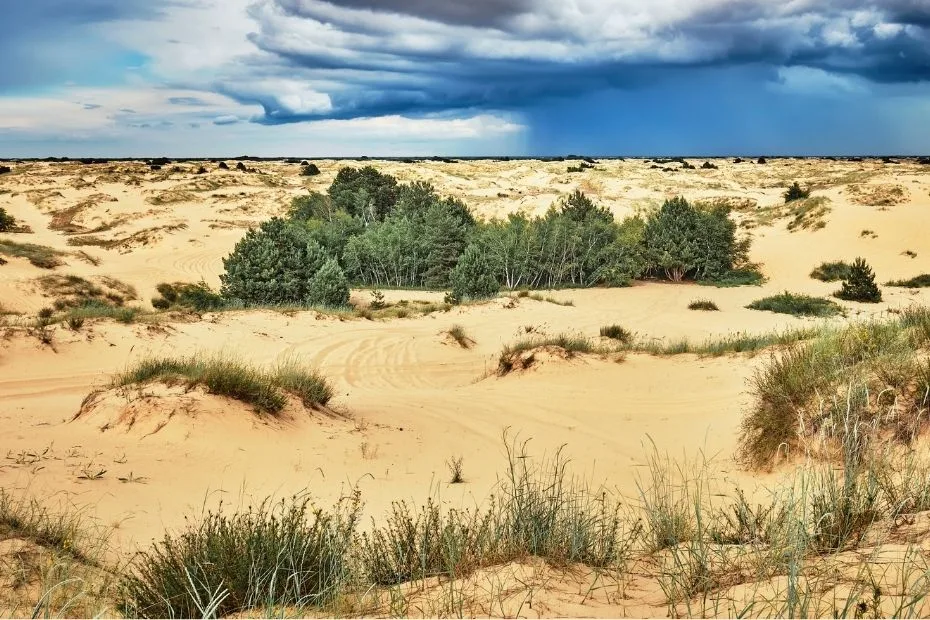
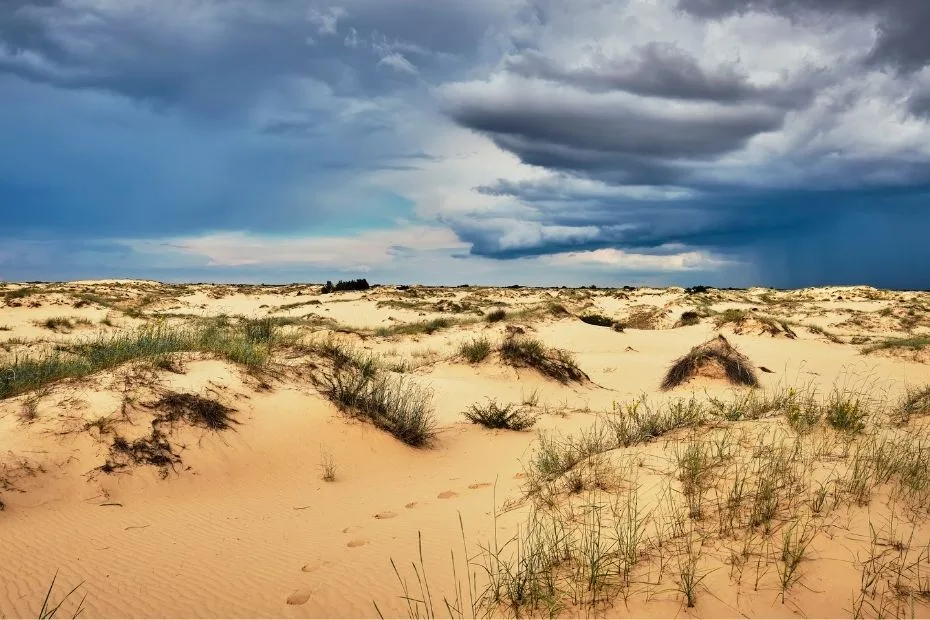
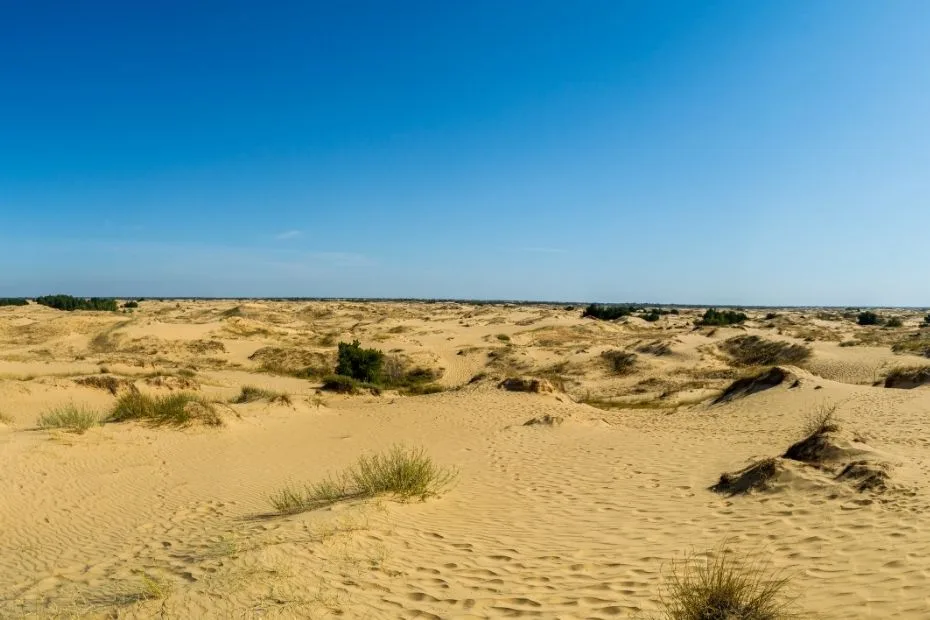
Photos of the Oleshky Sands
Physical Features
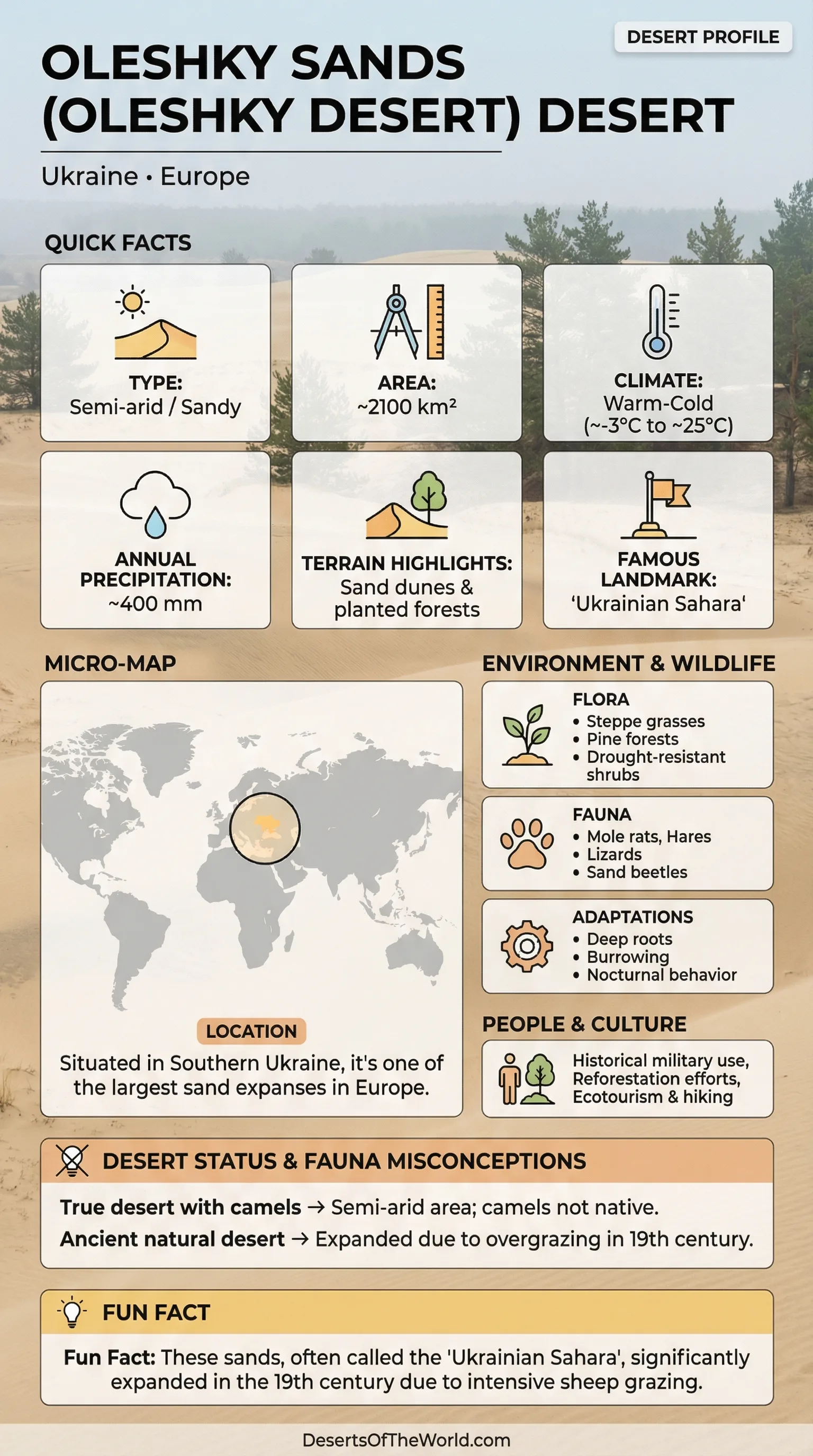
Area: Approximately 2,000 km²
Length: Around 50 km
Width: Up to 10 km
Elevation: About 20 m above sea level
Climate & Precipitation
Temperature: Summers up to 40°C; winters can drop below 0°C
Precipitation: Low rainfall, around 160–200 mm annually
Ecological Features
Ecozone: Temperate desert
Biome: Deserts and xeric shrublands
Ecoregions: Pontic-Caspian steppe, Oleshky Sands ecosystem
Flora & Fauna
Flora: Sparse vegetation; sand grasses, shrubs, and some endemic plants
Fauna: Lizards, rodents, foxes, steppe birds, insects adapted to arid conditions
Geology & Notable Features
Geology: Sandy plains, dunes, some loess deposits
Notable Features: Largest sand desert in Europe, shifting dunes
Introduction to Oleshky Sands
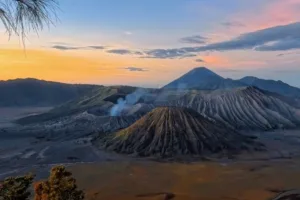
The Oleshky Sands is a stunning desert located in the southern region of Ukraine. Spanning approximately 162 square kilometers, this unique landscape is characterized by its golden sand dunes, diverse flora, and fascinating fauna. Often referred to as the largest sandy area in Europe, Oleshky Sands offers a captivating glimpse into the dynamics of desert ecosystems and their intrinsic beauty.
Geography of Oleshky Sands
The geography of the Oleshky Sands is defined by its unstable sand dunes, which shift and change due to wind and weather conditions. This desert is situated on the banks of the Dnieper River and lies adjacent to the Black Sea. The region experiences a continental climate, which heavily influences its characteristics. Notably, the Oleshky Sands contains sandy hills reaching heights of up to 6 meters.
Climate Conditions
The climate in Oleshky Sands includes hot summers and cold winters. Summer temperatures often rise above 30°C, while winter temperatures can fall to around -10°C. Annual rainfall is low, averaging 300–400 mm, which supports its classification as a desert.
Flora and Fauna
The Oleshky Sands supports a variety of plant and animal species adapted to harsh desert conditions. The vegetation is primarily composed of xerophytes, plants that thrive in dry environments, including species like sagebrush and thorny shrubs. Some of the fauna includes:
- Sand Vipers
- Desert Hares
- Numerous Bird Species (including horned larks and desert sparrows)
Interesting Species
Species found in the Oleshky Sands include the Ukrainian Gryphon and European Cold-blooded Lizards, which play roles in the area’s food web and habitat dynamics. The dunes also serve as a migration corridor for several bird species during seasonal movements.
Tourism and Attractions
Oleshky Sands is not only a natural marvel but also an emerging tourism hotspot. Visitors can engage in various activities, including:
- Sandboarding down the dunes
- Photography of unique landscapes and wildlife
- Guided eco-tours to learn about the local flora and fauna
The nearby city of Kherson provides access for visitors, with accommodation options and local services.
Table of Oleshky Sands Characteristics
| Characteristic | Details |
|---|---|
| Location | Southern Ukraine |
| Area | Approximately 162 km² |
| Climate | Continental; hot summers and cold winters |
| Average Rainfall | 300-400 mm annually |
| Main Vegetation | Xerophytes like sagebrush and thorny shrubs |
| Notable Fauna | Ukrainian Gryphon, Sand Vipers, Desert Hares |
Conservation Efforts
In recent years, various conservation initiatives have been launched to preserve the natural integrity of Oleshky Sands. Local and international organizations are collaborating to protect the delicate ecosystems from the threats of urbanization and climate change. Educational programs aim to raise awareness about the importance of maintaining biodiversity in this unique desert.
Conclusion
Oleshky Sands shows how desert-like environments can develop within the colder landscapes of Ukraine. Its ecosystems and scenery support both conservation and tourism. Protecting the area helps preserve its natural features for future generations.