
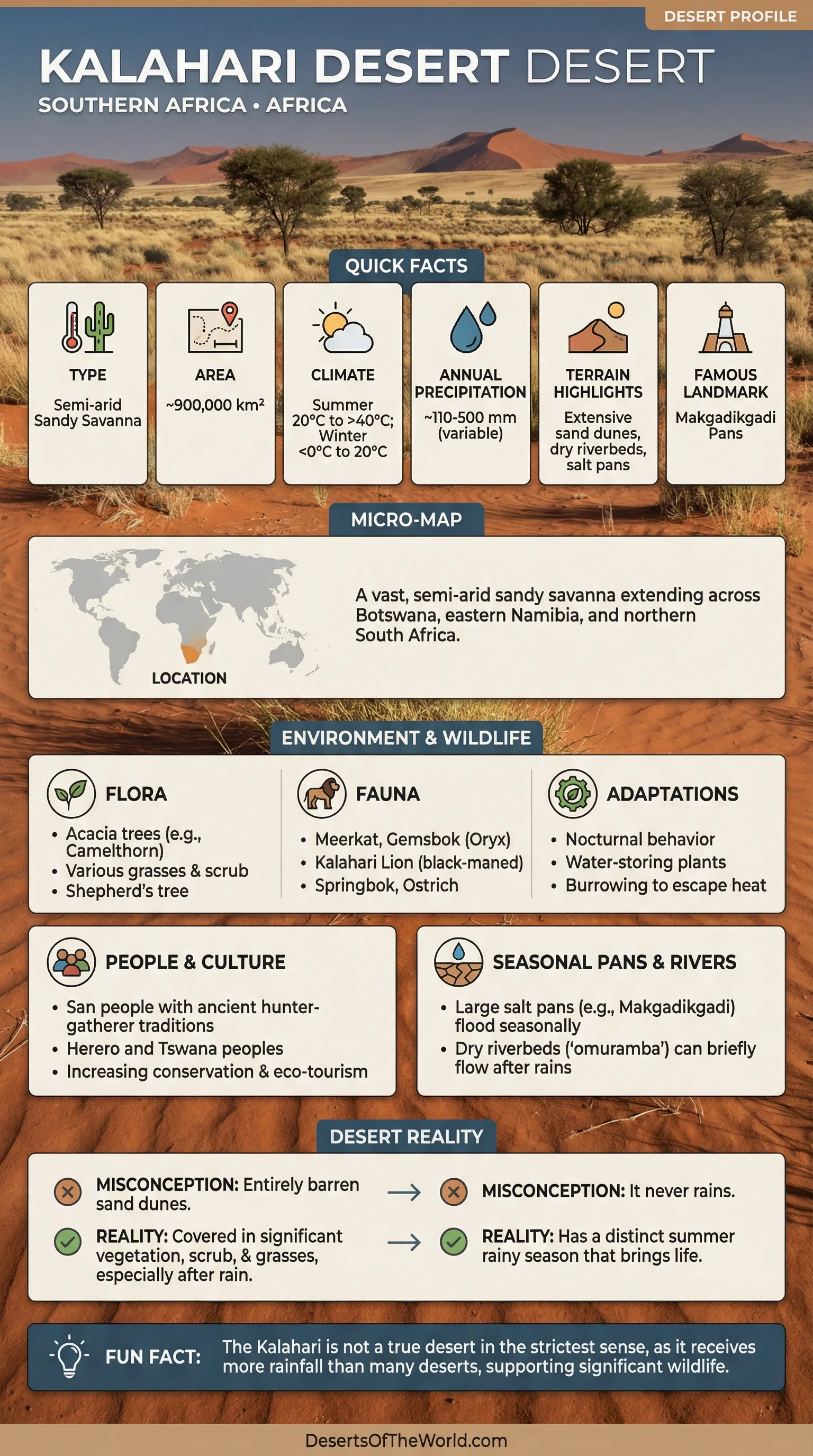
Location & Continent
Continent: Africa
Countries: Botswana, Namibia, South Africa, Angola, Zambia, Zimbabwe
Coordinates: 23°S, 22°E
Click to load the interactive map
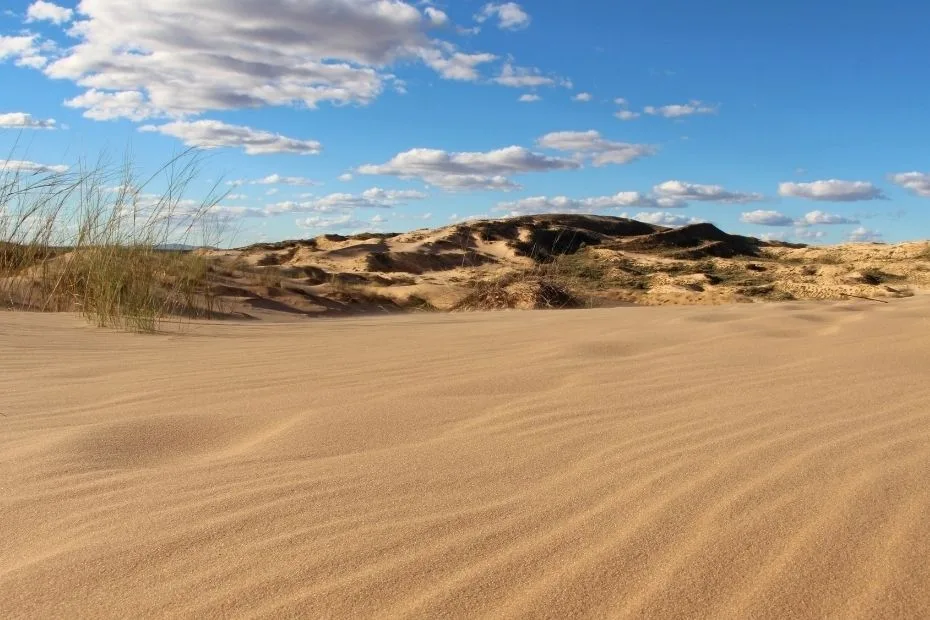
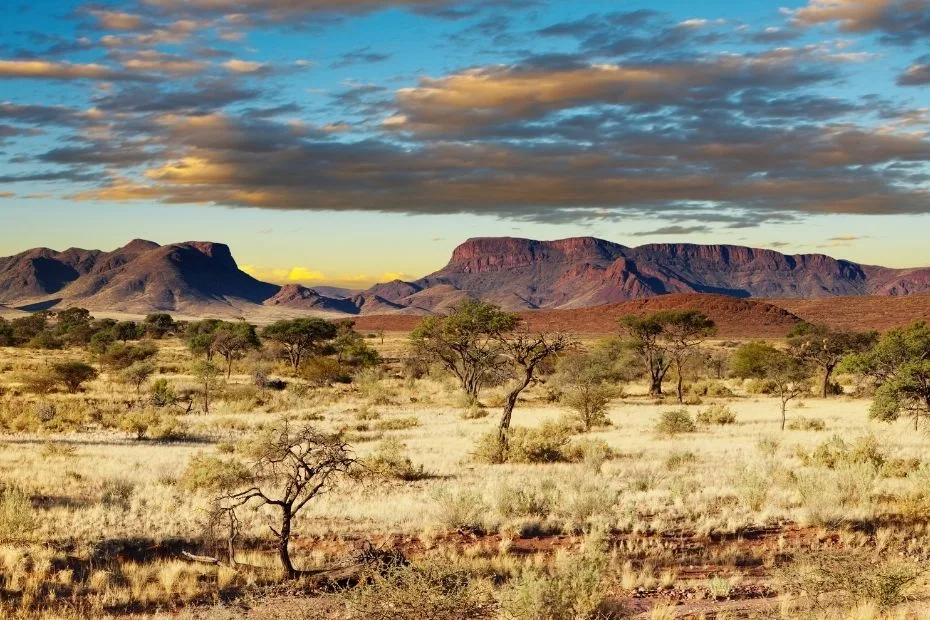
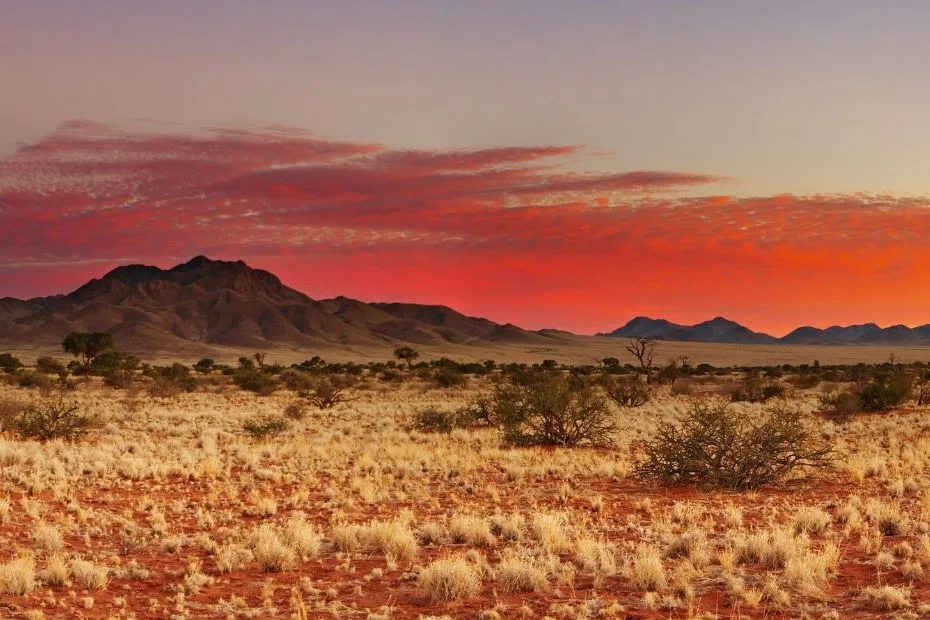
Photos of the Kalahari Desert
Physical Features
Area: ~900,000 km²
Length: About 2,500 km (north to south)
Width: 600–1,000 km
Elevation: Generally 800–1,200 m above sea level
Climate & Precipitation
Temperature: Summer up to 40°C; winter nights can drop near 0°C
Precipitation: 100–500 mm annually; more rainfall than true deserts, supporting savanna vegetation
Ecological Features
Ecozone: Semi-arid savanna and desert transition
Biome: Desert and xeric shrublands with savanna influence
Ecoregions: Kalahari Acacia-Baikiaea Woodlands, Zambezian Baikiaea Woodlands
Flora & Fauna
Flora: Acacia trees, grasses, shrubs; Baobab in some regions
Fauna: Lions, cheetahs, meerkats, gemsbok, springbok, giraffes, African wild dogs, and diverse birdlife
Geology & Notable Features
Geology: Ancient sand basin, covered by red sand dunes and fossil river valleys
Notable Features: Okavango Delta (in northwestern Kalahari), Makgadikgadi Salt Pans
Geography
The Kalahari Desert occupies an area of about 900,000 square kilometers, making it the second-largest desert in southern Africa, next to the Namib Desert. Its geographical features include:
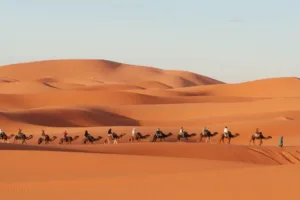
- Sand Dunes: The Kalahari is characterized by extensive sand dunes that can rise up to 30 meters high.
- Salt Pans: The Makgadikgadi Pan, one of the most famous salt pans in the Kalahari, is a remnant of an ancient lake.
- Riverbeds: Seasonal rivers like the Okavango and Zambezi traverse the Kalahari, contributing to its unique ecology.
Despite being classified as a desert, the Kalahari receives an average rainfall of 250 to 500 mm annually, which supports its diverse ecosystems.
Climate
The climate in the Kalahari Desert is primarily defined as semi-arid. It experiences:
- Hot Summers: Temperatures can soar as high as 40°C (104°F).
- Cool Winters: Winter temperatures can drop to around 5°C (41°F) at night.
- Rainy Season: The summer months (November to March) receive most of the annual rainfall, while the winters are generally dry.
The climate creates distinct seasons that affect plant and animal life in the Kalahari.
Flora and Fauna
The Kalahari Desert is home to a surprising variety of life, adapted to its harsh conditions. The following table highlights the notable species of both flora and fauna found in the region:
| Type | Species | Adaptations |
|---|---|---|
| Flora | Camelthorn Tree (Acacia erioloba) | Deep root systems to access groundwater |
| Flora | Kalahari Sand Rose | Stores water in stems |
| Fauna | Kalahari Lion | Larger size to hunt larger prey |
| Fauna | Meerkat | Social behavior for survival |
The ecosystem of the Kalahari supports over 200 species of birds, numerous reptiles, and various mammals, highlighting its importance as a biodiversity hotspot.
Significance
The Kalahari Desert has cultural and ecological roles:
- Cultural Heritage: The San people have lived in the Kalahari for thousands of years and maintain long-standing cultural practices linked to the region.
- Tourism: Sites such as the Okavango Delta and nearby national parks attract visitors and support local economies.
- Research: Plant and animal adaptations in the Kalahari are studied in ecology and climate research.
Conservation measures aim to protect the desert’s ecosystems and the communities that depend on them.
Conclusion
The Kalahari Desert is a large desert system with varied habitats and species. It differs from the common image of a barren desert by supporting plant, animal, and human communities. Conservation efforts help protect its ecosystems for the future.